
By Harry Roberts
In the 1500s and 1600s the Portuguese sailed the world and claimed colonies that could enhance their national wealth. In competition with Spain, they set out to claim half the world. Harry’s video story investigates the possibility that the Portuguese may had landed in Corio Bay in the 1500s.
Watch the video on Geelong Writers YouTube channel.
Visit Harry’s Moments in Time Webpage for more stories about people, places and events in our past.
ABOUT THE AUTHOR
Harry Roberts is a former teacher of secondary English, History and Geography. His interest in writing history was aroused at University. In his twenties he had feature articles published about prominent Geelong athletes and Geelong Athletics from 1990 to 1914.
Family and work commitments grew, so Harry devoted more time to those important aspects of his life. Now in retirement, his passion for writing History has been re-kindled. He has developed a webpage to publish stories about Geelong’s past as well as early, local explorers. On a larger scale, Harry has researched, and is writing, a novel based on a First Fleet sailor’s extraordinary life.
Harry is not just content to tell stories not only in text, but also audio and video media. Joining Geelong Writers’ Group has broadened his writing repertoire to include poetry and short stories in the Memoir genre. Membership also engendered opportunities for camaraderie in his passion for writing History.
Mathew Hamilton
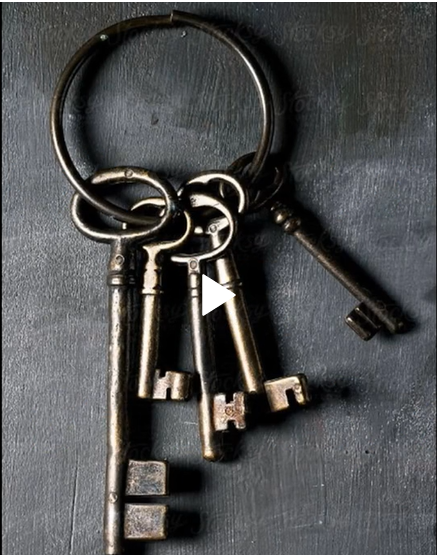
“The Geelong Keys”,
I enjoyed the movie but I have an alternative hypothesis to consider. LaTrobe was a little too certain for mine. Something was driving him.
I suspect this mystery was never solved due to suppression of details relating to what is known as the ‘mudflood’, because the keys were buried 5 metres underground, in a layer of seashells, and the shells were about 3 metres higher than current sea level. Charles Latrobe became fascinated, believing the keys were about 300 years old and linked to Portuguese explorers. He still believes despite being buried by a process usually taking thousands of years. Latrobe’s handwritten notes are interesting.
It’s obvious he knows about the mudflood and can probably recognise the Wool Museum is in a similar location with windows buried a similar distance below the surface. Nobody in their right mind would build with windows in the ground, but it’s something nobody questions. These buildings used sound frequency usually from bells or pipe organs and these building are much older than we were told, and Geelong didn’t have enough people to dig out the wool museum or build the giant prison in 1853, the population simply was too small.
The mud only occurs near these buildings, because this civilisation was most likely hit with a frequency weapon or event during the mid-1600’s, and the buildings caused the mud to vibrate out of the ground, a process known as liquefication. The traditional owners possibly survived this by not being close to the buildings, or were not as dependant on etherical energy, but Melbourne’s buried buildings were already there.
Geelong had fewer buildings, but mud covered the area from the Wool museum down to where these kilns were being excavated. Water can do all kinds of things with frequency vibrations, but Latrobe knows sea levels like this suggest 2000-3000 years, but these shells look much newer, closer to 300 years old, and he spends considerable effort inspecting ‘the rip’, suspecting that it must have become blocked, causing the Bay to flow out through Moolap sunklands and Barwon Heads.
I suspect this proves the Barwon River flowed into Corio Bay when the keys and shells were left as a clue, and his behaviour left even more clues. Another factor are the mangroves in Barwon Heads, they exist in Port Phillip and Corio Bay, and not likely to be 3000 years old either, it’s possible, but I suspect that’s when the river decided to enter the bay. It spent the next 2000 years creating a delta with Cowie’s creek that became full of mangroves, eventually building a 3-metre-high sandbar from Point Henry to Avalon. This is quite possible over 2000 years and still 600 years until the mudflood.
The estuary starts to close, and spends the next 200 years opening and closing, building the sandbar, and during the next 200 years blocks permanently. This creates the mother of all lakes, flooding the river all the way to Buckley falls, up the Waurn ponds creek and down to the blocked Barwon Heads river mouth, when it finally blasts its way out and reunites with the ocean after 2500 years. This creates havoc in Corio Bay, because the bay breaks through the sand bar, and does what LaTrobe was adamant had occurred. The bay flowed up the old river channel and then out through Barwon Heads.
This is when the water level dropped and deposited the shells that would be covered in mud. This is when Corio Bay gave Barwon heads it’s mangroves and cleaned out the 2000 years of fine sediment and dead mangroves, creating Corio Bay. The Corio Bay mangroves retreated to Limeburner’s lagoon; the sand bar disappears. The keys are dropped by a drunk Portuguese sailor who walked out of Lamby’s, onto the street on stumbled down to his boat, the ‘mudflood’ then buries them, allowing up to 400 years for the mangroves to form in Barwon Heads. We wouldn’t know except for the shells being deposited 3 metres higher and LaTrobe convinced they weren’t 3000 years old.
But I’m thinking the Barwon only decided to flow out via Barwon Heads about 600 years ago, and Corio Bay gave the estuary the mangroves as a parting gift between 400-600 years ago. During the 200 variable, either sediment or mudflood stopped Corio Bay entering the Barwon catchment, removing evidence of its 2000-year-old secret. Almost, because maybe LaTrobe saw something we couldn’t.
The snails were killed when the lake formed, altering the pH level and the empty shells floated to the lake’s shoreline. Latrobe recognised them as saltwater snails and salt water typically has pH of 8.1 or 8.2. The freshwater lake turned the water acidic over time, and pH down to 6.8 to 7. The mangroves surviving suggests the lake only lasted one or two years, there would have been four rivers feeding it – Barwon, (Moorabool and Leigh Rivers) and Cowies Creek and would likely have filled in two years.
The aerial photo of Corio Bay suggests the eastern side of Point Henry curls around and once joined the northern side of the bay, The mangroves don’t exist west of Barwon Heads in Victoria, and unlikely to enjoy 3000 years of unimpeded tidal movement.
The keys are a mystery because Tartarians didn’t use keys. LaTrobe is worried someone knows about all the grand architecture that he and his freemason buddies are claiming. In 1850-51, he helps create the tale of the Princess bridge, how they were so lucky to find a spot in the river only 2 metres deep, but I’m wondering where they found the bluestone. The river was 2 meters deep around the bridge, because for the past few years they were digging out Flinders Street station and dumping the mud over the side of the bridge before more people arrive, and trains start running by 1853 once the tracks are unearthed. I can send you a video showing we still used their wireless trams in 1910.
Princess Bridge was one of the longest low arch bridges in the world. By the mid 1850’s Melbourne was the richest city in the world, due to a gold rush so they say. The gold from the domes of the Exhibition Building, or the gold in the Ballarat goldfields? Pentridge prison 1851, Parliament House 1856, State Library 1854, the list goes on.
Let’s be honest, these were pirates not builders. Even someone with my imagination can’t make it make sense with horse and cart, hammer and chisel.
The more people know about these buildings, the closer we get to understanding the free clean energy they can produce by creating a collective consciousness healing energy we need