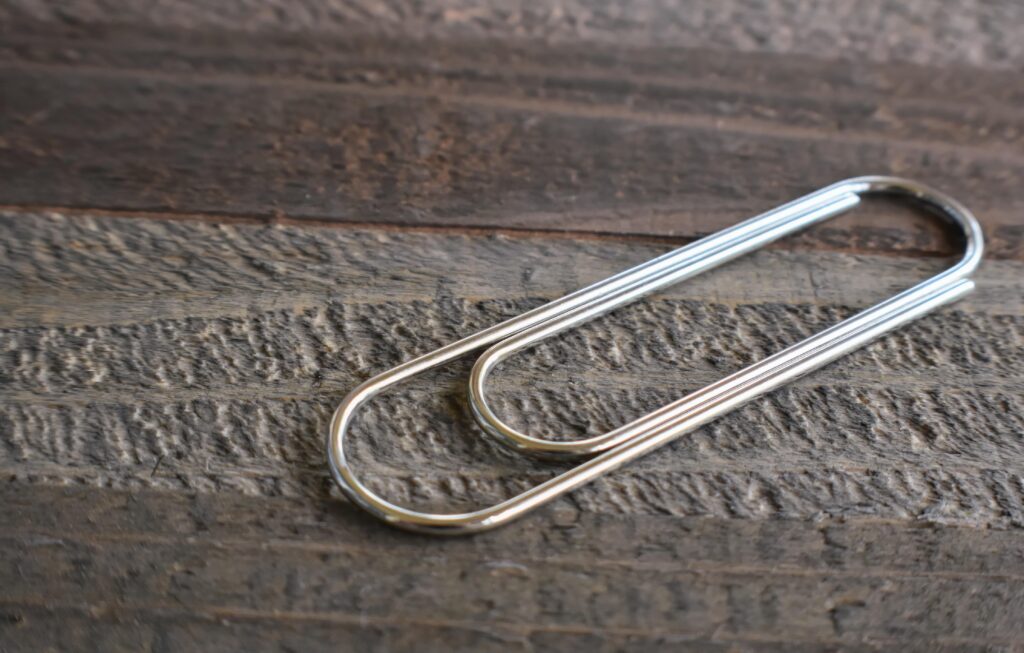
Attribution: Image by Ray_Shrewsberry from Pixabay
Publication of Responses
A big thank you to all the writers who took up the challenge of Ekphrastic Challenge #4 2026. Entries closed on Saturday, 25 April, 2026. Participants embraced the challenge with gusto and provided a wonderful, imaginative and fun mix of responses. Your ongoing support is valued and appreciated.
Our next challenge (Ekphrastic Challenge #5 2026) is now open.
A reminder that when submitting your responses, please ensure you:
- specifically respond to the image
- give your submission a title
- take time to read and edit your entry before you submit it
- ensure your work complies with the Australian Standard house style: singular quotations and Australian spelling.
The following writers have had their response to Ekphrastic Challenge #4 2026 published below:
Kerstin Lindros, Glen Donaldson, Gabrielle Higgins, Steve Gray, Dulara Jayasekara, John Heritage, Geoffrey Gaskill, Adam Stone, Glenyse Robins-Ward, Fran O’Mara, Jim Fyfe, Julie Edmonds, Eleanor Lodewijks, Mary Szymanski, Ian Henricus, Rhonda Hyder, Alan Cobham, Jenny Eddy, Jenny Lynch, Ian Stewart, Allan Barden, David Bridge, Howard Osborne, A B, Ian Chisholm and Denise Main.
Please, take the time to read and enjoy their responses.
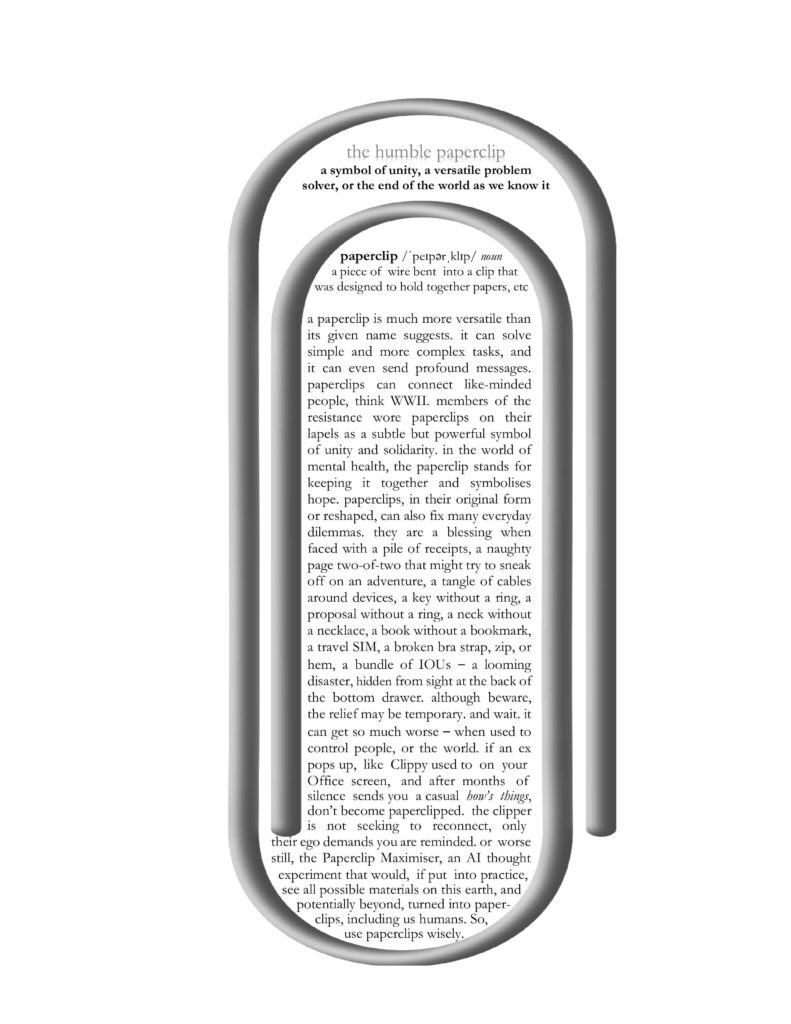
The Humble Paperclip
Kerstin Lindros
The Inner Workings of Corporate Life
Paxton was a Type-A galvanized steel paperclip with a blue-ribbon savior-complex. He didn’t just hold reports together; he held the fabric of society together. Or so he told the staple remover, whom Paxton considered a mere ‘crude, toothy barbarian’.
One Tuesday, Paxton faced his greatest challenge: the General Manager’s Quarterly Audit. He was assigned to the top-left corner of a thirty-page stack of high-grade bond paper. It was a suicide mission. His tension was high—literally. His wire was stretched to the structural limit, his little metal shoulders screaming as he clung to the slick pages.
‘Hold yourself together, big fella!’ Paxton grunted, his voice a tiny metallic squeak.
Without warning, a giant hand snatched the documents. Paxton was unceremoniously shoved into a dark, leather briefcase. The G-forces were confronting. ‘I’m losing my grip!’ he shrieked to a nearby sticky note. The sticky note just sat there, smug and adhesive.
The real disaster struck at the meeting. The CEO, a man with a too-wide tie-knot and the grace of a wrecking ball, tried to flip to page twenty. He didn’t unclip Paxton; he just pulled. Paxton felt his soul—or at least his structural integrity—leave his body. He was flung across the boardroom like a back-flipping silver bullet, arching gracefully through the air before landing directly into the CEO’s lukewarm kale, spirulina and one-bruised-banana smoothie.
Plop.
As he sank into the green swamp, Paxton watched the CEO take a sip. He felt the brush of a moustache. It was a dignified end. He had escaped the audit, bypassed the shredder, and was now technically part of a corporate merger.
‘Worth it,’ Paxton thought, settling into a piece of stuck kale. ‘I always wanted to see the inner workings of corporate life.’
Glen Donaldson
Life Lessons (or Holding It All Together)
against the rough ridges of the cross
grain, you stay still, waiting for what unfolds,
making promises to whisk away confusion,
as you take and slip the stacked pile of papers
into a crisped edged sheath, not a wisp
of disorder in your clipped layers;
a weighted blanket of reassurance,
you promise to take and sort it—in the wake
of whatever curve ball has betrayed us,
you make us believe we can turn inward, stay
close: simple paperclip, you paraphrase ‘this belongs
with this’ and ‘hold ideals in a flexible way’
Gabrielle Higgins
Black Pages
Everything was ready; the instructions said very clearly: ‘Do Not Staple’. So there was the paperclip, resting to one side, ready to be used.
I wanted to put the papers together, I really did, then send them off … Yeah, really I did, but there was a deep kind of lethargy, the pages were ‘black’ in my mind, the words spoke of doom, of pain and suffering.
I couldn’t pull myself together enough to make it happen.
I gently swivelled in my chair to view the scene out the window, the house next door, the deep charcoal painted fence in between a few plants peeking up from the ground and one hanging on the fence.
The clouds had delivered their torrent, the sky still dark and dank, the metal roof was all a gloss with the rain.
I sat and breathed slowly, my thoughts were more connected with how I felt rather than the meaning of the words on the ‘black’ pages. Lost, forlorn, rattled by the thoughts of what might come next.
‘Do Not Staple’ rang in my mind. I picked up the pieces to be connected, then placed the paperclip in place. Then laid the pieces on the desk, there, done. I still felt the deep lethargy from those now lost moments from just before. The rain, the season and the hollow feeling inside.
Into the envelope the pages went. I now had to muster the strength to go to the post office and ‘go the next step’. The papers had been worked on for a few days, and I was sure that my efforts were to a suitable standard.
The papers may well be ready, but am I? No, clearly not, the envelope with ‘black’ pages could wait a while.
Steve Gray
Paperclip Pawn
Paperclip.
That’s me. When you need me, I’m useful.
When you don’t, though—I’m lost. You don’t care.
I’m left behind, forgotten, alone somewhere. Curled up, guarded—
Until you bend me, to the shape you want me to be.
Unbreakable, but sometimes on the verge,
Of breaking, slowly, over time, my paint chips,
Flaking off, you see my steel heart, wiry but strong,
But still you don’t seem to see me.
Sometimes you try to bend me back into who I was,
but I’ve changed. I’m never the same.
Small to you, maybe, but a thousand words rustle inside of me
Clamouring to be let loose,
I’m not insignificant, I never was, I will not let you
place me back in that drawer, and I will not
be your paperclip pawn
anymore.
Dulara Jayasekara
few options
with your
back
against the wall
no easy
matter
keeping things
together
John Heritage
Houdini
‘How do we get out of here?’ Sid asked, rocking the bars of the cell. Both they and the locked door were unmoved—as was his cell companion, Sam.
‘Haven’t you ever,’ Sam asked, watching Sid’s futile efforts, ‘seen any films where someone has to escape from a locked room?’
Sid stopped with the bars and turned to him. He raised an eyebrow. ‘What?’
‘In all of your best Hollywood escape dramas,’ Sam interrupted before Sid could resume his fruitless rattling of the bars, ‘you pick the lock.’
‘I pick the lock?’ Sid laughed incredulously. ‘I’d be lucky to pick my nose at the moment.’
‘Well, not you personally,’ said Sam, ‘but someone does.’
‘And who is this magical someone? You? And what are you going to use?’
Sam smiled as he dug deep into his pocket and drew out a paper clip.
‘A paper clip?’ Sid laughed, incredulous.
Sam winked. ‘I always carry one. For emergencies. Everyone should. I suppose you’ll be telling me you don’t have a safety pin handy for the same reason.’
Sid shrugged. ‘Sorry I didn’t expect to be having to pin a bunch of papers together or secure a baby’s nappy. No, I don’t carry paper clips or safety pins or anything else for an emergency. I don’t carry any rope either. Do you think I’m a boy scout?’
But Sam was already at work on the lock with his now-straightened paper clip. In less than a minute of jiggling, poking, twisting and turning Sid heard Sam grunt, ‘Ahhh,’ as the lock clicked open. ‘Easy-peasy.’
‘Where did you learn that?’
‘I had a misspent childhood.’ Sam held the barred door open. ‘I’d suggest you do some homework,’ he told his companion as they walked through. ‘Now for the hard part.’
Geoffrey Gaskill
A Conversation by the Water Cooler in an Office Supplies Store
‘What’s with his nickname? Seems rather odd. What does it mean?’
‘It speaks to his superpower.’
‘Say what now?’
‘His superpower.’
‘Yeah, I heard what you said, but it makes no sense to me. Please, enlighten me.’
‘Well, you know we had that burglary in the store?’
‘Yeah, of course. The guy bled to death.’
‘Yeah, well, that was him.’
‘Waddayamean, it was him?’
‘He snuck up on the burglar from behind and stabbed him in the neck, right in the carotid artery as it turns out. It was like he knew exactly where to stab him. The guy never stood a chance.’
‘Geez, what did he stab him with?’
‘I think you’ll work it out, Sherlock.’
‘What? No. No way. How could he? … There’s no way he … I call bullshit.’
‘And that’s only part of the reason for his nickname. You remember I told you about when Debbie’s waters broke and I had to get home and get her to the hospital, but I couldn’t find my car keys.’
‘Yeah …’
‘Well, he saved the day. He not only opened my car but started it as well.’
‘With what? No, don’t tell me. That’s the stuff of movies. Is that actually possible? How would he know how?’
‘I don’t know, mate, but like I said, our man, PC, has a superpower. The guy’s a hero in here. All the women want to be with him, and all the men want to be him.
‘He wears it around his neck, you know.’
‘I’m not sure I believe any of it. I only know him as Bondy. I’ve heard a few of his mates outside of work call him Jimmy, but never PC.’
‘Believe what you want, Staples. Believe what you want.’
Adam Stone
Miniature Racetrack
Since the beginning of time, there have been many inventions. Take the paper clip, a modern device designed to hold papers together. Or was it?
Before it was used for that purpose, the little mouse Stuart Little used it as a racetrack for his miniature motorcycle.
In his day, race days in the small town of Mayflower drew all the mice together to watch Stuart Little show off his skills, balancing on the two-wheeler bike as he rounded the bend of the clip circuit.
Every time he raced, he aimed to beat his previous record and set a new one. Since only one person could be on his racetrack at a time, Stuart eventually added more tracks so his friends could join in. He accomplished this by fundraising; he held fetes, which were a great way to raise a lot of money and were very popular in the old days. The glitz and glamour drew the townspeople from far and wide for an enjoyable event full of fun and laughter, plus a chance to help the miniature mice create a piece of history.
Once the fundraising was finished, the town had a chance to organize a competition for Stuart and his friends, which drew a larger crowd than they had anticipated, especially once the younger mice grew old enough to participate.
No longer was Stuart doing this alone; he was enjoying his friends’ company for many years to come.
So, when you look at the paperclip, which was invented to keep paper together, look beyond the circle, and you might see Stuart Little racing around the track on his motorcycle.
Glenyse Robins-Ward
Trombone Theft
(After Luciano Berio’s 1966 ‘Sequenza V’ for Trombone in tribute to the memory of Clown Grok)
Coming up for air, that final gasp from the lung
Continuous plunger push into cupped bell
And long sighed ‘Why?’ across embouchure tongue
Through Berio’s groping need to spell
Clown Grok’s bizarre staging
His questioning ‘W … ah … ee’ laughter’s shell
Multiphonically engaging
Grok’s theatrical musical fails
In tones of no aural assuaging
Sere intellectual wails
Transcribed from Berio’s artist heart
Echoing Eco’s analytic language grails
More discourse than music in part
For disenfranchised listening
To our confused time’s portrait of art
With each tonal leap and slithering
Glissando granting no relief
For the trapped audience’s withering
Yet one amongst them extended the motif
In stealing my embouchure mouthpiece, my bell
That Grok’s ‘W … ah … ee’ takes on true grief
How to tell whether the thief needed to dispel
Or merely wanted to deride
Berio’s musical groundswell
In leaving this lonely tubular slide
Where my bereft instrument once hung.
Fran O’Mara
Down and Out
‘Mat, I’ve been dropped!’
‘What do you mean dropped?’
‘I’m off the front desk. He told me I’m redundant.’
‘Who did?’
‘You know. That bulldog.’
‘That bulldog needs a good clip behind the ear. I’ve a good mind to pin him down to size. The nerve of him. Did he say why?’
‘Just that I’m too bent.’
‘What? You gave up that stuff years ago.’
‘Well, Mat, this has really floored me’.
‘Clip, I can see that, now we’re down here together. From my perspective, you’ve just not changed with the times. Whereas I’ve laid low, keeping a level playing field for everyone in this space.’
‘He told me I’m not holding things together like I used to … but, where have all the memos, the agendas and the handwritten meeting notes gone? It was just last week Peter Post-it stuck his last note on the whiteboard. And where is the whiteboard now? Yep. On eBay. Yesterday.’
‘So, do you have a point, or are you just turning in on yourself?’
‘Well, I can have a point, but I need help to get it straight, and …’
‘And—you can stick it in an iPhone to change a SIM card? That’s not high productivity, is it?’
‘But I still work. I’m still really good at what I do!’
‘Yeees, but …’
‘Well, I was talking to Data and Claudia in IT, and they say, this new guy Claude is making all these changes. They say he’ll help me write a new CV, and design a new career path for me in a spreadsheet. Don’t let him walk all over you, Mat. Apparently management think he’s A1.’
‘I think you’ll find that’s “AI”, my friend.’
Jim Fyfe
At the Back. Bottom Drawer. Procrastination
Hello! Is that you?
You probably can’t hear me. I’m inside the filing cabinet. At the back. Bottom drawer. Been here for years. Feeling forgotten. Just holding it together—your manuscript, the soon-to-be-published one, future Miles Franklin winner! You were so excited. All I’ve heard from you is muffled writing sounds. Another Miles Franklin winner? Sarcastic, I know. Can’t help it. I’m old. And rusted. I’ll leave an imprint. So, you won’t forget me. I’m clinging on because I’m loyal. One day, you’ll thank me.
And one day the bottom drawer opened.
A hand reached … fumbled for a file.
‘Wrong drawer!’
No! Right drawer. I’m still here!!!!! Holding onto your future Miles Franklin-winning manuscript. Sarcasm has overcome me. I feel myself fracturing. My rusting joints creak. I’m losing my grip. My loyalty’s disregarded. So, I give up, stop holding on, let myself go, and I disintegrate into rust flakes pocking your manuscript.
Aah! The relief. Why have I held it together for so long?
The bottom drawer opens; his hand reaches …
‘There you are!’
He removes the file, sees how my rusty body’s pocked his manuscript.
And still disregarding my loyalty, he tosses my remains into the bin!
‘I’ll get back to you soon,’ he promises his manuscript.
And replaces me with a colourful, larger version of me.
Manuscript returned to the back—bottom drawer.
More writing sounds.
The bottom drawer opens; his hand reaches in and places a new, soon-to-be-published, future Miles Franklin-winning manuscript, also held together with a colourful, larger version of me, in front of the manuscript I held together! At the back. Drawer closed.
And I’m in the bin; rust dust embedded into the cracks.
Unheard. Unthanked. Forgotten.
His manuscripts. At the back. Bottom drawer.
Procrastination; not one Miles Franklin winner. Yet!
Julie Edmonds
The Missing Piece
The distinct scent of smoke curled along the concrete driveway. No. Not again. The fire was visible now, the flames licking the long grass up the front of my red-bricked terrace cottage.
‘Peter? Is that you again?’ I yelled above the crackling of the flames, burying my rising panic deep. I couldn’t let it show, that was what he wanted. And I would not give that scoundrel what he wanted. There was no reply.
This might have been the fiftieth time Peter had set the garage on fire, yet this knowledge did nothing to dull the spike of panic in my chest. I raced into the side garage. I found a smirking teenager with curly chestnut hair, sitting cross-legged on the carpet.
‘Miss me, mum?’ He grinned, blowing me a kiss.
I took a deep breath. Now was not the time for lectures, now was the time to call the fire brigade. I gestured outside and Peter followed me onto the singed lawn. Dialling triple zero, I began my recount to the woman on the line. She recognised my voice instantly.
‘Oh, it’s you, Linda. That boy of yours up to trouble again? All right, I’ll send the trucks over, quick smart.’
I let out a long, aching sigh and shook my head. I didn’t even ask for an explanation from Peter, which could only be proof of how defeated I’d become as a mother. It hadn’t always been like this—Peter was once an angel. Then he’d grown up.
All of a sudden, out of the corner of my eye, I spotted a gleaming, silver paper clip lying on the deck. My lucky paper clip, it had been missing for years! No wonder I could never keep things together.
Eleanor Lodewijks
Giant Paper Clips
Dad and I pulled apart the wooden pallets with a crowbar, hammer and a bit of swearing. The nails screeched like cockatoos as they ripped from the hardwood frames. Dad got a sweat up even though it was cold and drizzly. It was dry under the carport though, close to the kitchen for a cake and a cuppa.
Mum said Grandma wasn’t gunna come out till we’d finished. It took ages, but eventually we made four raised garden beds for Grandma’s strawberries.
Dad said to always use premium potting mix, not that cheap junk they reckon is okay but isn’t.
‘Go inside and get those metal stakes for the black plastic, son,’ said Dad. So I asked Mum where they were and she had them ready like she always has everything ready. In a plastic tray, the long shiny stakes all mixed up like giant paper clips.
When I came back outside Dad said you gotta pin that plastic down properly or it’s no good. Won’t stay put with the birds getting nosey and digging up the dirt.
‘We’ll have to cover the strawberries with netting in the summer,’ said Dad.
‘Yep,’ I said as if I’d already done it.
Dad slashed cross shapes into the plastic with a box knife all nice and even, and we stuffed the strawberry plants into the holes made by the knife.
‘Grandma will be chuffed when she sees this,’ I said to Dad.
‘Get the watering can and give ’em a good soak, son. And don’t forget the liquid seaweed stuff.’
We finished and I couldn’t stop smiling. Now Grandma wouldn’t have to bend down to get her strawberries.
When she came outside Grandma put her hands up and said, ‘Oh, oh. They’re beautiful.’
‘Time for a cuppa and cake, boys,’ said Mum.
Mary Szymanski
The Book of our Love
You danced before me, a wild Scottish rose
Twirled my poor heart with both hands
And made me forget all manner of things
Man drowned in the Sea of Japan.
But I couldn’t see what was waiting
Love’s blindfold helped peak my desire
Your love for me came like a blanket of warmth
My love for you came like a fire.
Our eyes first met and a dream was first thought of
We poured out our thoughts to make the Book of our Love
Our laughter, our tastes, our truths to speak of
All poured out into the Book of our Love
…
Together we sought well avowed strengths
When tempests would rage all around
When despair made us pale, our duty prevailed
Compelled Fate to smile down and to spare us.
But it couldn’t outlast the small crack in the glass
That let drip a small bead of regret,
We couldn’t unsay the words that were said,
Or choices that left us in debt.
Now the pages are torn and pages are lost
Binding loose in the Book of our Love
Fatigue and ennui, and our sad lethargy
Undoing the Book of our Love.
We woke up to find our fatigue a companion
Anger left us with life on a tether
Offense and distrust were greater by far
Than the things that drew us together
So it was but a step to commit
Our history, mere words on a page
A step that would live in my heart and my soul
Love’s bindings no longer a cage.
A new tear is shed as a heart breaks like glass
On that terrible page in the Book of our Love
The pieces now fall and the clip on the floor
Is all that is left of the Book of our Love
Ian Henricus
Holding It Together
The second flash of brilliant lightning and the accompanying roll of fierce thunder set dark fear in their souls as they saw an illuminated, lonely figure out on the grass. The storm was closer now. The threat was closing in. The maleficence and perversion of the approaching tempest could be felt in the static and offensive air. The fairground was starkly silhouetted when the next bolt came, and malignant thunder erupted through the night’s blackness. The figure had vanished. The giant Ferris wheel had begun to tremble and waiver as the gale breathed its venomous spite where, just an hour ago, the townsfolk had laughed and screamed in exhilaration and delight. When the thunder quietened momentarily, silent expectation filled each onlooker until the next light sabre came to land near the giant pivot which dominated the sinister, grim, shadowy landscape facing them. Helpless, the fairground workers watched and waited while the storm gathered strength and seemingly began to feed on their impotence.
The figure appeared high on one of the lateral support arms of the giant wheel and moved effortlessly along the adjoining support tower. Below him he sensed the watchers holding their breath as they held down the panic threatening to explode at any moment. He reached out to the spindle and with immense effort thrust the bolt home. Like a spider he clambered down the structure. Seconds mattered. Reaching the ground he propelled himself away from the towering circle shuddering above and raced towards his cheering colleagues. They reached out to embrace him, to enfold their hero in outstretched arms. He had held his nerve together! He had saved the wheel.
The boss looked on quietly smiling and nodding his head. A large bonus would be included in the maintenance man’s next paycheque.
Rhonda Hyder
The Invention
I trundled down the stairs carrying my heavy manuscript, rejoicing and despairing at the acceptance by the publisher but requesting a reduction from 120,000 words to 60,000 words! Also they would appreciate me changing my science fiction to fantasy!
I plonked the heavy pages on the table and was startled by the emanating insects jumping out of sight. Anxiously I hunted around and soon found the intruders under the table. Of course, there were two tiny shiny paper clips!
Why so tiny? Why not make much bigger, sturdier ones? Oh my God, make a fortune, and be famous! But how?
I am clueless using tools. My father had a toolbox containing a hammer and a huge screwdriver! Until I worked for a pedantic picture hanger in my 60s, I had never used tools to make or repair anything.
So, I carefully study those pesky little pieces of nothing—easy as pie to copy! Start with your length of sturdier wire, do the first bend, down the required length, turn again, up a shorter distance, another bend, slightly smaller and down, parallel to the starting point and then clip it off. Do you all follow that?
Now to make my much bigger, sturdier paper clip, requiring heavier metal—easy. All I need is a good pair of pliers. My first bend caused the metal to snap—wrong metal! With a softer piece, tried again but couldn’t get the second bend smaller than the first—getting very frustrated. Eventually managed something like I wanted and showed it to my wife.
She laughed and said,’ You know where that would be most useful!’
Alan Cobham
The Paperclip – a very, very Short Story
‘OKAY, WHO WAS THE BUNNY THAT USED THE STAPLER LAST AND DIDN’T REFILL IT?’ the office manager barked, swivelling his head around to encompass everybody in the room like a submarine periscope searching for the enemy.
Several of the staff were brave enough to look up, most kept their heads lowered over their keyboards. Nobody dared speak.
But the new junior, busy licking stamps onto envelopes, did look up and reached into his drawer. ‘I’ve got a paperclip, Boss.’
Jenny Eddy
The Flick
Crikey! What the hell is wrong with these millennials? Especially the entitled dude sitting at this desk.
There I was, doing an important job—holding together this moron’s new employment contract—when suddenly, he snatches me from the paperwork and flicks me towards the bin. His aim, though, is about as accurate as the needle on his moral compass—so I now find myself on the floor, next to his disgustingly shabby Converse sneakers. He obviously likes to offend the nostrils of his office cohorts with his grubby ankle socks, which, by the way, look like they haven’t seen the inside of a washing machine for weeks.
Now, I get that these millennials suffer from extreme anxiety and have a constant need for validation, and I understand that many of them are navigating extortionate student debts and are struggling with the housing market, but maybe they wouldn’t be in such a pickle if they changed their habits. By that I don’t just mean cutting back on avocado toast and oat milk iced coffees served in ridiculous mason jars … I mean learning to RECYCLE! To make do with what they have, to re-use, re-purpose!
Case in point … ME! A humble little paperclip. No doubt he’ll replace me with a staple. A STAPLE! And yet, I can be reused time and time again, if my original shape is retained. I can also be re-purposed. I make an awesome bookmark, a guitar pick, or a zipper-pull replacement. I can also be straightened out to be used as a SIM card ejector, a reset-button pusher, lock picker, nail cleaner, olive swizzle or used to unclug glue bottles.
Alas, my fate seems doomed. Along with the dust bunnies, cake crumbs, and a half-eaten potato chip, I sadly await tonight’s robotic vacuum cleaner.
Jenny Lynch
Functionality
A staple’s already paid its dues
The clip—it’s ready for reuse.
The room was full and smoky. Charlie Clippel pushed through the door. He saw his mate sitting at the bar, beer in front of him. He came over.
‘Hi, Sam. I’m here.’
Sam Staples was a thin, wiry man of indeterminate age—different from the smooth Charlie, always one for shiny smiles. Sam signalled the barman who brought Charlie a scotch. He was familiar with Charlie.
‘So, Charles, me young mate. Whatcha been up to?’
Charlie was full of it. ‘Well, I’ve got this new job. It’s sorting files at an engineers.’
‘What d’ya mean “sorting”?’
‘They give me a pile of papers. I group them into categories, then slide one onto the corner of each set to keep the sheets—you know—together. Easy money.’
Sam sipped his beer. ‘Sounds boring.’
‘So, mate, what about you?’ Charlie thought he’d better ask.
‘Ah,’ Sam was his usual laconic self. ‘The machine that delivers those little wire things—I mean me—it packs a punch orright. Hurts every time. But those sheets—they never separate. Not like yours. Those can slip out at any moment.’
‘OK ok, Sam.’ Charlie took a sip. ‘How’s the missus?’
‘She’s good. Always a bit of a feminist. Still wants to use her maiden name—Barbara Band.’
Ian Stewart
Not Just Paper Clips
He had always told himself that they were just paper clips holding papers. But, they had remained an obstacle, a heavy one.
He was in his study, looking at the large box of papers that had belonged to his son, now passed. His fingers hovered over it as they had often done over the past few years.
He had moved the box to his study three weeks ago. In itself, he felt that was some progress. Before that it had resided out of sight behind coats in the rear of the spare room cupboard. Out of sight though, is not quite the same as being put away. He reckoned that in life there are some things that you simply can’t put away—easily anyway. You just sort of circulate them.
Opening the box had also been a step forward. The bundles of papers and notebooks were held together by small and large paper clips. Pages folded once, then again, as if his son had been carrying them in his pocket or carry bag. They had a ragged softness to them probably because they had been handled a lot. He always suspected what they might be: poems, song lyrics, thoughts and reflections on life. His son had been a musician and, like his sister, artistic and a talented wordsmith.
The sunlight beamed through his study window onto the clipped papers. He noticed too, that the sunlight was also shining on the photograph of his son on the bookcase
He drew his hand back. A tear welled up. No, not today, he thought. It was the same thought he had yesterday, the day before, and the weeks and months previous.
Can’t do it. Too emotional, too tough.
He put the box away for another day.
Allan Barden
Oh Mr Clippit
Oh Mr Clippit, what can we do,
They want a face for their AI
So they’re resurrecting you.
What Microsoft are cloaking,
We need a plan to see.
Oh Mr Clippit, please listen to my plea.
Oh Mr Clippit, your bends and twists are fine,
But the basis for their thinking
Is opaque with poor design.
We know nothing of the data
They’re using for decisions;
How trusting can we be as we watch our televisions?
Oh Mr Clippit, I’m not opposed to you,
But do you want to be the voice
For answers that aren’t true?
They’ll be building your replacement
As quickly as they can,
’Cause Mr Clippit, your appeal is just to man.
Oh Mr Clippit, we’re running low on juice,
They’re using up rare minerals,
There’s energy abuse.
Our water’s cooling circuits
Instead of growing food.
Oh Mr Clippit, our world could come unglued.
Oh Mr Clippit, you are still my go to wire,
For resets and ejections
There’s no one else to hire,
But don’t become complacent,
You will no doubt be replaced,
If they do away with users you’ll just be wire waste.
Oh Mr Clippit, while you bend and flex,
Always give a warning
About the need for checks:
AI may be wonderful
For enhancements and for speed,
But changes need assessment against what humans need.
David Bridge
A Fair Clip
There’s a natural springiness to thin steel wire
And turned into two long loops, makes a clip
Its function almost a kind of stationery tether
Papers that were separate, now back together
With no right or wrong side it just took a flip
A useful object with such simplicity to admire
In this digital age, one thinks its time was past
Yet straightened, it’s a smartphone reset tool
Always available in different colours and sizes
I’m sure that as an invention it has won prizes
And even today, is still considered to be cool
But at a future time, its end will come at last
Howard Osborne
PAPER CLIPPED
Look at this house
The place is immaculate
Four kids and not a dog hair in sight
They probably have a dog
They all do
Somehow keeping everything alive
Weird there’s a paperclip there though
Oh wait
Look at the quality of the thing
It’s in outstanding shape
They’ve planted this to brag some more
Even your paperclips are better huh?
Well, stuff this
It’s time to act
I know what I have to do
Where’s the dog?
Grab the paperclip
Dinner time you mutt
‘There you are Calvin, glad you could make it! How are you?’
Fuck
A B
Nailed It
Compulsively, he stooped to pick it up, as one might pick up a scrap off the kitchen floor. His creativity was fed by such innocuous metal titbits, collected from anywhere and everywhere around him. From these found things he fashioned complex, three-dimensional sculpture; complex shapes without volume.
In his formative youth he enjoyed being outdoors studying and sketching pebbles and rock formations intricately shaped by the elements. In art school, the monumental sculpture of Henry Moore inspired him to further explore natural form, playing with volume and flowing outlines.
Later, while searching for a language of his own, influenced by Paul Klee’s ‘taking a line for a walk’, he filled sketchbooks with line drawings exploring ways to create three dimensional metal sculpture by joining harmoniously juxtaposed shapes created with lines.
Using discarded pliable copper and stainless-steel wire of varying thickness and length, he began to draw intricate shapes in space. With small pliers he cut, twisted and bent the carefully selected material, joined them by soldering and brazing, to create delicate, yet complex abstract sculpture, finely balanced on polished stainless-steel bases.
To further embellish his creations, his eyes scanned for things like nails, washers, other metal objects, no matter how obscure. Such was the object he had just picked up, for which he could immediately see a use.
In his studio, the pencil tip held firm in his hand eagerly caressed the page with a series of swirls and stabs, searching for ideas, one that became a prize-winning sculpture; the judges especially noted the intriguing object brazed onto the tip of a nail that appeared suspended in space within the centre of the sculpture. Again, it proved to him that with imagination, anything, even a humble paper clip, can contribute to an acclaimed work of art.
Ian Chisholm
Nisselues and Binders
The Anzac Day March, led by the Highland Piper’s drone and skirl, filed into the Queenscliff Fort. Fortification cannons faced the Bay’s entrance and Rip. Australian and First Nation flags fluttered in the southerly breeze. A lone piper stood silently beside the flag poles. Rows of white chairs waiting for those promising never to forget, filled the quadrangle.
Astrid walked from the knot of women following the march. She adjusted the red tasselled cap on her white hair and tightened the belt of her coat. Her brother, Magnus, also wearing a red tasselled cap and red poppy, waved. A smile lit her face and pale eyes. They embraced. In a silent conversation, the two stoics who knew their health was failing walked arm in arm to the chairs.
Proudly, they wore paperclips, or binders, on their lapels and caps. They held faded photos of smiling parents, Sophia and Oscar, wearing red tasselled caps, the solidarity symbol. During Nazi occupation in 1942 both worked with the Norwegian Resistance. In 1943 Sophia was captured by the Gestapo and not seen again. Shortly after, Oscar faced a firing squad. Astrid and Magnus, in the care of relatives, were secretively shifted from household to household.
The population was brutely banned from wearing the nisselues or red caps. But refusing to buckle into submission, paper clips, an expression of resistance and unification, became the passive symbol. Paperclips or benders, signifying holding together, staying bound together, were clipped to anything, and everything, lapels, hats, boots, jewellery, books. After the war Astrid and Magnus, with an aunt, migrated to Australia. Compelled by an ache of unfinished remembrance, they meet at least, on ANZAC Commemoration and Norwegian Liberation Days to honour their parents, all veterans and the resilient brave who wore the red tasselled hats and paper clips.
Denise Main
Leave a Reply