
Publication of Responses
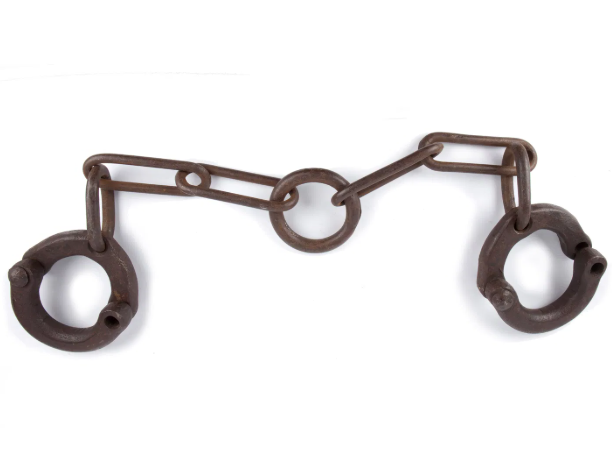
A big thank you to all the writers who took up the challenge of Ekphrastic Challenge #7 2026. Entries closed on Saturday, 25 July, 2026. Despite being bound indoors by the winter chills, participants managed to break their shackles (sorry!) to provide a wonderful and imaginative mix of responses. Your ongoing support is valued and appreciated.
Our next challenge (Ekphrastic Challenge #8 2026) is now open.
The image provided for the August Ekphrastic Challenge has been kindly provided by Mel King. Mel is the convenor for Geelong Cereal, a free online magazine that showcases local writing and creative arts. It presents a wonderful opportunity for those who participate in our Ekphrastic Challenge to have more of their work published online. You can access Geelong Cereal through the Geelong Writers website or directly at Geelong Cereal. Please take the time to visit this fantastic local resource.
A reminder that when submitting your responses, please ensure you:
- specifically respond to the image
- give your submission a title
- take time to read and edit your entry before you submit it
- ensure your work complies with the Australian Standard house style: singular quotations and Australian spelling.
The following writers have had their response to Ekphrastic Challenge #7 2026 published below:
Amelia Miller, Adam Stone, Kim Crosbie, Mary Szymanski, John Heritage, John Margetts, Steve Gray, Zoe Tate, Peter Barker, Ian Stewart, David Jones, Geoff Gaskill, Howard Osborne, Glenyse Robins-Ward, Jan Pittard, Jenny Lynch, Ian Chisholm, Denise Main, Julie Edmonds, Allan Barden, Rhonda Hyder, David Bridge and Ian Henricus.
Please, take the time to read and enjoy their responses.
A crime scene laid out on the cobblestones
A crime scene laid out on the cobblestones
A world of misery, blood and bones
Stealing went up
Honesty came down
Sleeping on the ragged floor
A miserable family for me to care for
Ushered onto a lonely ship
Rip
Flip
Clip
Strip
Everyone’s story equal to mine
Stolen: bread, butter and wine
Our Life in chains
Pains
All while the government gains
My children gone
My wife forlorn
We wished that we had never been born
A full two years spent in darkness
The ship’s hull bedecked in starkness
Our bloody lips stitched with cracks
Whips and canes bleeding backs
The work tearing down our body and mind
Our souls our hearts left behind
Then one day we found a person
The situation began to worsen
They didn’t like their cultural ways
They believed they were some just some strays
The sun brang no promise, the dusk brang no peace,
They believed the fights between cultures would never cease
Denial of their human rights
Insecure safety throughout the nights
Death and punishment
For an uncommitted crime
They didn’t have a lot of time
They said we had a chance of redemption
Tension
As long as we had the adequate attention
We bowed our heads and bent our knees
To survive the dark uncharted seas
Now we stand in the sun’s warm light
Forever freed from the endless night.
Amelia Miller
Soapbox
‘She’s always got a barrow to push. Gets her goat up so easily these days. She used to be easy-going. I know what you’ve said about her being the only single one amongst us these days. I get it, I do. Everyone else has been married off, and she hasn’t made it to the altar. I just wish she wouldn’t be so opinionated and antagonistic, the way she bulldozes her views onto other people. These days, I feel like I have to tread so carefully around her eggshell temperament. Say the wrong thing, and she’s all over you like a bad rash.
‘I really don’t want to go tonight. She’ll be up on her soapbox faster than grease through a goose. Nothing surer.
‘All I want to do is have a nice, relaxing night, catch up with a few of the guys over some beers, talk some sport, and any inane rubbish we feel like without being made to feel like I’m underachieving in life, because I’m not showing sufficient concern for the plight of the poison dart frog in the Amazon.
‘Maybe tell them I’m crook, and I’ll try to catch up with the guys soon.’
‘No way! Don’t be ridiculous. She’s not that bad. People can evolve, you know. Become interested in different things. I know she can be a bit full-on sometimes, but that’s just because she’s passionate. At least she’s moving with the times. Not everyone wants time to stand still.’
‘What’s that supposed to mean?’
‘Maybe it wouldn’t hurt you to have an opinion on something other than sport and the vagaries of the surf conditions. Anyway, you’d better find the keys to the leg irons, clean yourself up and put some pants on. I’m gonna take a shower. You said you’d drive tonight.’
Adam Stone
Chained to the Mirror
To the fat on my stomach
The boobs too small
Far too short
Why can’t I be tall
My hair that’s always in my eyes
The nose the size of Texas l despise
Look at those feet! They are so flat
The thighs I see – way too fat
To the numbers on the scales
Skin so pale
Crooked yellow teeth
Unkissable lips
The huge bum
Below monstrous hips
Bitten bleeding nails
Flabby arms that look like sails
Look at the dry flaky skin
The thick hairs under my chin
Then I hear ‘I love you for every thing you are
For the smile that greets me when I come home
The arms that hug me are so warm.’
I drop the chains they are so full of crap
Don’t fall for the mirror trap
Your warmth, your care
Just being there for yourself
You are everything you’re supposed to be
I have just found the key.
It was on the mirror’s shelf.
Kim Crosbie
He Wasn’t Alive
I found him in the hut, up in the high country. Legs stuck out and head thrust back against the greying palings, as though contemplating this cumbersome life. My heart jackhammered in the monochrome gloom. I thought he was dead. Then I saw the heavy leg irons bangled to his ankles like monstrous jewellery.
My eyes adjusted to the low light. I could see he hadn’t moved, and with great relief, I knew he wasn’t dead because he wasn’t alive. He wasn’t anything. Just a mannequin. What the hell was he doing up here?
Lonely and depressed? God knows, he looked depressed. With nowhere to go, jangling like a harnessed Clydesdale. Unshaven and barefoot in his hessian attire.
What the hell was I thinking?
Depressed?
He wasn’t alive.
I cleared a spot on the ground next to him, sat and told him of my journey into the bush. My temporary bid for freedom from the shackles of urban life with its noise and bullies and putrid pollution.
He understood, gave me space to speak. I was grateful he had the decency to listen. It was nice to have some company.
I rolled out the swag beside him and adjusted his head so he could rest more comfortably.
After collecting kindling and firewood I got a blaze going. The rudimentary fireplace gave life to his facial expressions. And mine, I expect. We sat like two old mates who’d had their say, thinking hard, just listening to the bush at night.
If only I could remove the irons that kept him trapped in the hills. It might be a painful task. But he wasn’t alive, was he?
When I woke next morning, a feeling of elation enveloped me. I sat up and turned to speak to my new friend.
He was gone.
Mary Szymanski
Untitled
John Heritage
Untitled
Office of the Colonial Secretary,
Downing Street,
London,
14th March, 1862
Sir,
I have had the honour to receive your Despatch No. 47, of the 19th December last, together with the pair of manacles of novel pattern, fastening in the manner of a bow-tie or “butterfly” clasp, which you forwarded for my inspection and such observations as I might think proper to offer thereon.
I have caused the articles in question to be examined by an officer of competent experience in matters of this nature. His report is on the whole favourable.
The principle of the device — namely, that the two wrist-loops are drawn together and secured by a central locking clasp resembling the form of a bow or cravat-knot — is ingenious.
I am not disposed to discourage experiment in matters of this kind, and I can well believe that conditions in Victoria, and the particular requirements of the Gold Fields police and the gaols, may render a lighter or more readily applied restraint a convenience not to be lightly set aside. I would, however, counsel that no general order for the replacement of existing irons be issued until the pattern has been tried for some reasonable period under actual service conditions, and a report furnished to me upon its durability and security.
I return one of the pair herewith, retaining the other for further examination at the Ordnance Office, and I am, Sir,
Your most obedient, humble Servant,
Newcastle
To Sir Henry Barkly, K.C.B.,
Governor of Victoria, &c., &c., &c.
John Margetts
Left Wondering
I discovered the leg irons in the back of the dark, cluttered old shed. I didn’t know, but they had been there for a very long time, a sheet of rusty roof iron lay propped up against the wall, hiding their existence. I peeled away the rusty sheet, and there they were, hanging on a robust old nail.
I called out to sis, ‘Susie, did you know these were here? It looks like they’ve been there a long time.’
Susie came into the shed. She had been hacking at the weeds on the outside, our efforts to clean things up for the sale of the property were progressing slowly, and we had now made our way to the shed. Susie walked up through the mish-mash of items on the dirt floor and let her eyes adjust to the darker corner.
‘Oh,’ she sighed, then continued with, ‘Well, Cam, that’s interesting, I didn’t know about them, I had no idea half of this “stuff” existed, but they are interesting.’
She reached over and plucked them off the nail, out in the full light outside the shed. We hazarded a guess as to what they were: leg irons, shackles, perhaps part of a horse’s tackle. That one was quickly dismissed.
An internet search said they were leg shackles. The property went back many years, so the possibility of leg shackles on some unfortunate soul would indeed be a sorry blight on our family history, but let’s not jump to conclusions too fast.
We knew a few things about the history of the place, but we could only go back as far as what Grand Ma and Pa would tell us, which wasn’t much. So we were left, wondering who, how, why, what and where? Wondering …
Steve Gray
Unleashed
A single open door,
And I am unleashed,
Feasting blood and snapping necks,
Shredding skin with claw,
Feral, flipping cars,
Ripping eyes from heads,
Screeching, bat-like, crouched on roof,
Spitting blood and tooth,
Snarling at old sea,
Sprint to dusk, and dusk, and dusk.
Zoe Tate
The Warrior and the Regal Witness
These chains that hold my mind to me
Outside my mind; I would be free.
The fierce warrior that stands the wall
Now from this height, I seem quite small.
He shouts and warns with clenched fist.
Angry sword swinging at the mist.
At phantoms, who avoid and tease
And dance around his ire with ease.
And all the while with regal view
Blows forth a smile that does imbue
And lights the night within the mind
Of warrior, whose fears are blind.
Upon the isle, upon the wall
Alone, abandoned, empty, small
Yet as I float; behold the view
There’s lands and worlds I never knew
Outside the mind that held me fast
I’m light, I’m flying, free at last
Gone the chains, armour, mail
No sword to swing, on clouds I sail
No war I find, no enemies
But bird and fish and lake and trees
And in my mind; a question asked
‘Why am I here, what life, what task?’
That chains me so upon the wall
And fighting battles big and small
’Gainst enemies I cannot see
Protecting all on bended knee
The regal mind once more does smile
Of dreaming there upon the isle
Of warrior, so afraid he’ll fall
And what it’s like to be so small.
And face the fires and fears and woes
A problemed life, a thousand foes
In castle high in turmoiled skies
If consciousness would thus surmise
Expand the view and there to see
A trillion souls inside of me
For thus the mind’s not all it seems
And hence dream on a trillion dreams
Peter Barker
Shackled
Transportation – a way out of the hell hole of the Thames hulk. Thank God.
Once on the high seas – no turning back. We were kept below decks like cattle; vomit and shite everywhere.
Sydney Cove – hellish-hot but it gave fresh air. And they fed us so we could do a day’s work. But the leg irons – only off while on the job.
Now, my crime was stealing a fobwatch. I was a practised pickpocket. They got me, finally, and here I am. Not wanting to lose my skill I homed in on one of the gents who had come over, free. Lots of fine clothes, lots of money. And a beautiful hunter in the fob, along with a gold chain. That’s for me, I thought. But he was too quick. He grabbed my wrist and called for help. And here I am – in leg irons again and on my way to Norfolk Island.
*
It is literally the end of the Earth. I decided to behave, maybe earn a few points. It’s an island, so there’s nowhere to go, anyhow, so escape was off the list. And the ‘darbies’ on my ankles kept me from running. As you know, I’m smart. So I cosy up to the second-in-command, a bit of a pushover really. I get out of my shackles and become the kitchen man to Her Highness, his wife – cleaning up, doing some cooking, even tending to the veggie garden. And – what do you know, there’s this comely young housemaid. Ho ho! This is the life for me, after all!
Ian Stewart
Rain of Consequence
“To hear a pin drop” is an idiom used to describe a situation of profound silence.
20,000 children have died in Gaza alone, these fallen have not created enough ‘noise’ for us to listen.
Shadow falls
as we, tethered to choices made
seek light in the resultant umbra
Within time’s embrace
we are bound
fettered by the tide of lot’s ill cast
to search in vain
to forever seek freedom’s key
Illusive ‘clavis’ from a time too gone
perhaps, its loss, a fancy of convenience
but not for us
so bound to consequence
A precipitation of silence
dilutes blood of innocents
upon the ebbing steps
we descend
into a quietus of denial
The falling pin, stilled
held in situ
unable to fracture this hush
as 20,000 wait
Ready to crash
like thunder after lightning
illuminate a world dark
Reveal what we have done
as we stand upon the ghats of Lethe
coins of passage held
To pay the ferryman
to take them away
from our conscious,
our concern,
our blame
We, bound in iron
the shackles of what we have done
of what we have not done
our raised faces drenched
as red-rain falls
We are indeed prisoners
chained to those we have ignored
these children we have allowed to die.
David Jones
Port Arthur 1840
The man with the manacles on his wrists and legs had given up struggling. Those fetters were made of iron and, therefore, unbreakable.
Well, he thought, they’re not unbreakable, unbreakable but I can’t break them.
He looked out through the bars of his cell.
Freedom. That’s what he saw. Forget the swathes of grass, forget the trees, the ocean, the birds soaring high overhead, what he saw was something more indefinable. Freedom was beyond his bars, beyond his reach, beyond his … desire. If I were free, he thought, what wouldn’t I do?
The laugh was nasty and bitter. ‘What would you do?’ a voice in his head asked him. ‘You’re thousands of miles away from your home. Your wife and family probably think you’re dead. And even if they don’t what could they do? Like you, nothing. You’re here. You’re not free. Forget it.’
The voice fell silent.
He had to agree. The chains that bound him weren’t just those made of iron on his wrist and ankles. The worst of his chains were the miles between him and those he loved.
‘If only …’ he told himself.
The voice in his head laughed out loud. ‘If only? What? You’d have done things differently? That’s what everyone here says. And you know that’s a lie. Faced with the same situation, you’d do the same all over again. You’re all the same. You think you’d not get caught if you had the chance to do it all over again?’
He dropped his head. He had to admit lying to himself was another form of wrapping himself in more chains.
Geoff Gaskill
Painful Comedy
A live comic in London, risked failure
Asking the audience, just to be clear
To raise their hands, if from Australia
He said he knew what they were doing here
But I sensed that he was having a lark
A few also responded with a cheer
Sometimes comedy’s edgy, if not dark
I’m unsure if his joke really did rhyme
The punchline evident in his remark
So have you been down under, all this time
Many return to the scene of their crime
Howard Osborne
Missing Piece
Jack started his daily check walk along the beach past the lighthouse, where he always walked in the mornings, but he hadn’t noticed until today that a section of the large convict chain that normally hung from the pole by the side door to the winding staircase was missing.
The chain banged furiously against the pole in the wind, and the bottom section lay limp on the ground, but the missing piece was nowhere to be seen. All he could do was cut the chain from the pole, leaving the pole bare and deserted.
For a couple of weeks, Jack looked high and low along the foreshore and into the semi-dense area on the other side of the pathway, which adjoins the sand dunes, but to no avail. Although it was an old convict chain, it looked very attractive wrapped around the pole.
Jack still didn’t give up looking for the missing piece each time he went for his walk. Although he had walked both ways from the lighthouse, nothing turned up until one day he saw a dark object dangling from a branch of a fallen tree.
‘What are the odds?’ he thought. There it was, the missing piece of chain, flapping in the wind and rustling. He couldn’t believe it; he could now insert the missing piece of chain and reattach it to his pole, so it would no longer be bare.
How it broke into two pieces remains a mystery. Did someone deliberately break it and then return the chain to the area, or was it his fault for not checking it more often? ‘This is something he will never know.’
Glenyse Robins-Ward
Iron Bond
I am shackled to you
our bond, forged in the heat of that original furnace,
has been made stronger
even when temperatures cool
sometimes the bond chafes
sometimes it impedes my progress
but I have submitted to it
need its weight and solidity
to be iron clad in fidelity
like the two limbs of one fork
we cannot move except in tandem
weathering and rust
do not reduce its strength
just show time’s passage
a unique patina has formed
that marks our skins enduringly
these links and chains contain our flesh
and will outlast it
Jan Pittard
Forever Shackled?
Dearly beloved, we are gathered here today to celebrate the fact that Daryl finally found someone willing to put up with him. I speak, of course, of the lovely Connie.
So, Daryl, in front of your cherished family and dearly-loved friends, do you promise to be forever shackled to Connie?
Do you promise to always abide by the first golden rule of marriage … that being … that Connie is always right? And that if you ever have an inkling she could be wrong, you will slap yourself hard and read that golden rule again?
Do you promise to always laugh at her jokes and watch Rom-Coms with her, without complaining or rolling your eyes? Do you promise never to hog the remote, never to hog the doona, and never, ever, eat the last piece of chocolate?
Do you promise to accept the lion’s share of household chores and maintain the garden and motor vehicles? Do you promise never to leave your dirty clothes on the floor and never to leave the toilet seat up?
Do you promise never to answer the question, “Does my bum look big in this?” with “Compared to what?”
Do you promise never to check or question Connie’s credit card bill, the joint bank account withdrawals, or check her personal bank account, because, let’s face it, Daryl, the second golden rule of marriage is… what’s yours is hers, and what’s hers is her own!
And finally, Daryl, do you promise to stand by Connie’s side and defend her to the death in the zombie apocalypse? Because, trust me, Daryl, the way the world’s been lately, it’s coming. Soon.
Hang on a sec, Daryl … Daryl, where the hell are you going? DARYL! Come back! I said SOON!
Jenny Lynch
New Arrivals
‘Me uncle an’ auntie immigrated ta Orstrailya inna fifties, an’ only cost ’em ten quid each, but had ta stay at least two years.’
‘Way back inna olden days, me great, great, great granfarva gotta free trip ta orstrailya.’
‘Free? Ya kiddin’ me.’
‘Nah, its the truf. All ’e ’adda do wuz nick a couple a towels anna shirt. They wuz lookin’ fer bods ta help start a noo country. Sailed onna first fleet.’
‘Read a long while ago sumfink abart it. Farnded wot become Oz. Ow da yuz know abart yer great, great, great, granfarva though?’
‘Well, me granfarva came back from there an’ tole me dad abarht it. Said they slapped ’is legs in’eavy shit called leg irons sose ’e couldn’t ekscape. When they arrived in Oz, all these blacks wif nuffink on was shartin’ “warra”, “warra”, “warra”, real unfriendly like.’
‘Sarnds bloody terrifyin’. W-w wot ’appened next?’
‘Well, our big chief all dressed in ’is fancy gear steps ashore wiv ’is mates an ’e says, “g-day and how are you going,” friendly like. An’ the black chief goes, “Warra”, “warra.” But they put their spears darn.
So, our chief yells like ’e owns the bloody place, “I say, do you have a flag?” an’ they just stared an’yelled, “Warra”, “warra”. Well, our chief says, “You have to have a flag.”
‘So, ’e plants this dirty big union jack inna sand and says, “In the name of King George the Third, I proclaim this country and everybody here, belongs t’the British Empire.” Then they turned an’ marched back t’the ship.
‘Next thing, everyone’s choppin darn trees an’ settin’ up tents an’ shit an’ makin’ ’emselves at ’ome, like.’
‘Funny ain’t it; I ’eard the Orstrailyan aborigines ’ave got their arn flag now, an’ it looks oright.’
‘Good on’em’.
Ian Chisholm
Wearing the Darby
Still dark, I startled awake to blacksmith’s gruff voice, ‘Boy, up, darbies to make. Fire-pit needs coal, water trough filled.’
Silence filled the wattle-daubed hut as voice and footsteps disappeared.
Transported on ship Scarborough, blacksmith, me, raw sixteen and assigned to him at a Sydney Cove forge. Long, hot, sweaty days followed, body aching, covered in coal dust. I learned to cut, heat, hammer, bend and rivet white-hot black iron from dawn to dark.
Orders came for Smithy to forge heavy leg-irons, darbies, in convict flash, as English imported leg-irons slipped off, intentionally or accidentally. Shackled convicts, cruelly punished without fear of resistance, crushed rocks for roads, built bridges and other structures.
Smithy’s strong arms formed anklebands from heated iron bars, bent and shaped around curved anvil. I was shown how to forge hinges for the chain bracelet and metal pin. The bracelet links made the chain heavy to restrict the labourer’s stride and were permanently locked by a hot rivet. Only a smithy could remove the rivet.
These were attached as punishment for trying to escape the brutal hell hole, speaking the flash, first or further crimes. As I hammered in the hot rivet, my heart wept. But glad it wasn’t me made to wear the darby. It taught me to stay by Smithy’s side, become a smithy and keep out of trouble, the only way to survive.
When Smithy hammered rivet from the ankle-cuff of a white-faced convict, I silently rejoiced, sent a smile, until the sight and smell of putrid flesh after months of wearing the punishment had me turn my face away.
Seeing him freed from the darby, take his first free strides, in what must have felt like an eternity, I could only wish him well and call it a good day’s work.
Denise Main
The Shed
‘Ouch!’ Rust shards drew blood. But she managed to slide the latch across the door of the shed she’d inherited from her grandparents. Her relationship with them had been tense. There were secrets. She was the sole survivor in her family and sensed sinister tendrils reaching from the past, tethering her to them.
The door creaked and resisted her pressure before giving way. Her eyes adjusted to the dimness: bats chirped at the disturbance. And amongst an entanglement of spider webs and layers of dust, she found leg irons, chains, and objects she didn’t recognise; she sensed terror. She resisted the urge to lock the shed, abandon it.
And run.
In a battered chest, she found photographs of indigenous people in leg irons and chains. And was that her great-grandfather holding a rifle? There was a familial lean in his stance. Familiarity in his body shape, the gleam in his eye. Horror rippled through her. She was related to him! The urge to run was overwhelming. But first she snapped photos of the shed’s interior. Of the chest, its contents. Of the shed’s exterior, the landscape. Its beauty denying past horror. The family home, once grand, is derelict. She struck matches and tossed them inside it. Around it.
She photographed the burning. Then she ran!
She stopped at the local newspaper office. Scribbled a note about crimes committed decades ago, wrapped it around the camera card, and slid it under the door, her wound hot and throbbing.
She kept running; she was collateral damage. An arsonist now.
With nowhere to be. Nowhere to go. She cursed the shed. And her grandparents.
She ran as sirens blared until surrender became her only choice.
And the consequences of generations fell upon her as she passed out, arms reaching to catch her.
Julie Edmonds
Brothers In Arms
It had been a wet day. The night was chilly and my coat remained damp from the day’s rain. Beyond the field on the other side of the wall the big house sat back from the road. My job was to stay by the wall as lookout.
Matthew was already inside the field. I could just make him out when he moved. He knew there was no margin for error. I wanted to call him back. Not because it was wrong, but because once done, there was no going back.
Behind us the village lay quiet. There was a time when nights were full of sound: good Irish Craic at the pub, voices, laughter. In 1846 Wicklow Co. hunger and grief had put paid to that. In mud cabins mothers lay awake with children who no longer had the strength to cry. No one asked, but we felt they counted on us.
There was no point talking about the consequences should we be caught. We knew. Everyone knew the law and who it really served. To a British landlord, sheep were worth more than the starving Irish.
A sheep moved. Matthew froze, then grabbed it.
That was when I heard them. Hooves and the voices of men moving through the undergrowth. None would be experiencing or care about our hunger.
I raised my hand, the signal we’d agreed on years ago when stealing apples was our worst sin. Matthew saw me. For a second, we were boys again, deciding whether to run or stay. There was no question in Matthew’s face, just a kind of desperation and resignation. We had done what we could.
They had us in chains before morning. It was quietly done. No violence, no tirade. Just an understanding on both sides that this was how it was.
Allan Barden
Lizzie Hayward
I was an orphan child, thirteen years of age, separated from my brother Nicolas and apprenticed as a cloak maker to Thomas Croft. Three weeks after my employment I stole a linen dress, a silk bonnet and a cloak and sold them to Sarah Phillips. I needed the money so that I could reunite with Nicolas. Instead, I was held in Newgate Prison, then sentenced at the Old Bailey to transportation to the colony for seven years. I sailed on the Lady Penrhyn. I was the youngest female convict on the First Fleet.
For eight interminable months the Lady Penrhyn was home. I grew accustomed to the rank smell and the cramped conditions in the darkness of the ship’s hold. Miraculously, I avoided the cursed scurvy and the smallpox but fell victim to dysentery when our paltry food rations began to spoil. I yearned for the brother whom I would never see again. Sometimes the sailors would allow me a brief sojourn above deck. There was always a price to pay for this endowment. I managed to avoid the dreaded shackles to which many prisoners fell victim. The sight of those poor creatures fumbling in semi-darkness and struggling to regain their equilibrium as the ship was tossed and hurled about in the storms we encountered, left me with nightmares that lasted the rest of my life. Raging seas and cataclysmic winds had me screaming for the protection of my mother. At other times, the ominous stillness in the tropics and oppressive lack of wind left me yearning for the sight of what was to become my new home.
On January 26th 1788, we arrived and I was immediately assigned to Mary Johnson, the chaplain’s wife. I worked hard as a servant but a year later I was in court again for insolence to the Reverend. I was given thirty lashes and shipped off to Norfolk Island aboard the ill-fated HMS Sirius. The vessel was shipwrecked in dangerous surf. I survived. I met my first husband William, a convict. We had three daughters. A son was later born to another convict, George. My children grew as free settlers. I gained my emancipation and became a farmer owning sheep, swine, goats and four cattle. Governor Macquarie decided that new settlers were needed in Van Diemen’s Land. My then partner, Joseph and I attained a land grant, south of Port Dalrymple. We sailed on the last ship of evacuated settlers, the Lord Nelson and settled in virgin bush to battle diseased crops, snakes, flooding, sheep stealing and aboriginal raids.
Eventually, we built our home here in Launceston. I am 62 now, not long for this world. At night I dream of the manacles and my life at sea in that long, dangerous voyage. I remember my lovers and the children I bore. I still yearn to know what happened to my brother Nicolas. I was the youngest female convict on that first fleet. Now I am the oldest still living.
Rhonda Hyder
The cost of order
Shackles clanked on the stone pathway from the dry dock. Men entered in single file, ankles and wrists calloused or raw depending on time incarcerated. Those with bloody skin stared with angry eyes, while their habituated counterparts gazed downward, spirits eroded like their chafed limbs.
It was hard to meet accusing stares and I instead studied the officers managing this sorry procession. Some wore expressions of satisfaction, pleased with their power. Many, however, affected a grim indifference seemingly anxious to have this activity completed. Most acts of rebellion occurred at this time, prompted by the thought of returning to the dark confinement of the cells.
My orders were to assess the effectiveness of expenditure to output, and dead or maimed workers were not conducive to profitability. Sadists were costly in those running the system, although a posting here usually implied a less than exemplary record.
An oath from one of the convicts brought an eager response from one of the brutish guards who stepped forward pushing the butt of his rifle into the chest of the offender. It was a foolish act as, with arms surging upward the convict’s wrist chains caught the weapon and slammed it into the guard’s face stunning him. As he fell, the convict wrapped the chain around his neck and pulled it tight.
The closest guards rushed, weapons raised barely restrained by the Lieutenant’s order, ‘Hold!’ I knew that a close quarters melee would be hard to contain, chains or not. Skilled men would be sidelined or lost. I breathed again as the convict let his arms slacken and the choked guard slumped coughing. Neither man would enjoy their next days but I knew where my sympathies lay. Unbound men posed risks, but unrepaired vessels threatened trade and invited piracy.
David Bridge
Chains
In darkness, I clung to my cozy black dog
My companion for life I assumed.
The warmth of his body, his tongue on my neck
In my darkness, that sad flower bloomed.
In darkness, some hands, far stronger than mine
They hauled me and never let go,
Till one day was placed on the wet of my tongue
A pill like a wafer, the answer I’m told.
Unbind my hands, unchain my feet!
Give me a taste of life when it’s sweet
A pill on my tongue and a skip in my step
Unfurl my sails cause I’m movin’ on … from here.
Like soiled linen to clean, my thoughts are still mine
They just need some love and then dried on the line.
To know that my hurts are with me in ways
To be cared for and kissed when my life is appraised.
I’ll learn how to trouble the world for some wine
I’ll sing all the songs I know that are mine
I’ll dance in the morning, I’ll dance with the sun
I’ll run through the field till my chest is undone.
Unbind my hands, unchain my feet!
Give me a taste of life when it’s sweet
A pill on my tongue and a skip in my step
Unfurl my sails cause I’m movin’ on … from here.
A toast to my wife, my brother, my friends
I submit all my faults and make my amends
A nod to the medic who knows how it goes
A laurel to the one who made Lexapro
And now to life … oh sweet life!
A choice of flowers, rich with favour
To conceive a place where love is reached
The calm of silence to turn to and savour
Unbind my hands, unchain my feet!
Ian Henricus