
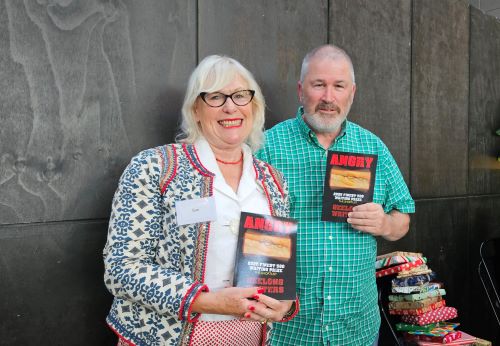
Finest 500 2025
Prize Winners: Sue Gourlay (First Place), Martin Smith (Second Place), Geoff Gaskill (Third Place – Absent)

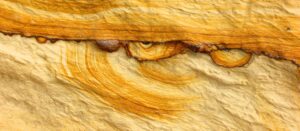
Angry by Tom Adair
The Finest 500 is an annual competition for members of Geelong Writers. Entry is free. This year, writers were invited to submit prose or poetry of up to 500 words in response to the theme “Angry” and the image above (provided by Tom Adair). Thank you, Tom! The entries were read blind by Kerstin Lindros, Mel King and Guenter Sahr, who compiled the shortlist. Thank you, Kerstin, Mel and Guenter! Judy Rankin kindly accepted the difficult task of determining the finest of these fine submissions, and the place winners. Thank you, Judy!
For those writers who didn’t make the shortlist this year, we appreciate the time and effort put into your submission and we encourage you to keep writing! There are more competitions and opportunities to acknowledged your hard work in the future.
TERMS OF THE COMPETITION
- Entries can be fiction or non-fiction, any genre
- Give your work an original title (not included in the word count)
- Your name should not appear anywhere on your work as the pieces will be judged anonymously
- Entrants must be paid members of Geelong Writers
- Limit of one entry per member
- Our house style is Australian Standard: singular quotations and Australian spelling
ADJUDICATOR COMMENTS
Judy said of the prize-winning pieces:
All the stories were well written, imaginative, descriptive (in a very limited word-count), and well executed.
First place: Crushed, by Sue Gourlay. Apart from being well written, I found this story came with surprises. It made me smile in parts and ended with complete surprise.
Second place: The Sedimental Bloke, by Martin Smith. This story was enjoyable to read. I felt it used the visual prompt well to create a great story.
Third place: Arrival, by Geoff Gaskill. This story also responded well to the visual prompt, creating a fun story.
Judy Rankin is a published writer, experienced editor and publisher. She is the owner and operator of Jaymah Press, a local business created to help writers get into print.
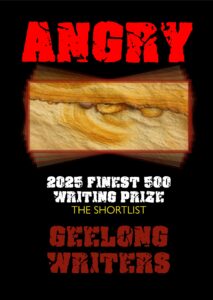
All 10 shortlisted works are published below. A chapbook can be purchased through our Publications page. Please enjoy!
FIRST PLACE
‘Crushed’ by Sue Gourlay
I was serving last drinks to a FIFO crew when one of the blokes winked before slipping me his room number. ‘My name’s Cliff,’ he revealed. ‘Drop over and …’ I didn’t wait for the obvious, simply replying that my mother warned me to stay well away from cliffs. Unabashed, he laughed and promised he’d hold onto me real tight. ‘Your mum too if you’re both up for it.’
I immediately slapped his face.
That kind of talk had pretty much disappeared, but from time to time the grog took over and it felt like being back in the eighties when a bum squeeze and nipple tweak were considered not just part of the job, but a compliment.
To be fair, occasionally, I took up the offer of a room number and all that it encompassed; particularly when my rent was overdue. Naturally, at my age I couldn’t be as picky as I once was, nevertheless wankers like Cliff were totally off limits no matter how fat their wallets.
Besides, the mention of my mother alongside the arsehole’s name had overwhelmed me, triggering an unnerving childhood memory.
I’d stared up at the cliff from the beach, well away from the rocks mind, mum worrying that the jutting soapstone could collapse at any moment. She’d informed of an entire family buried alive when huge shards broke off from the precipice and tumbled down onto the beach in a place, exactly like where we were walking. And be watchful of the tide. And the waves. Freak waves swamped little girls like me who would drown or be eaten by sharks who constantly circled barely meters from the shoreline.
My cousin Shine and my bikini clad auntie strode ahead; Shine using a penknife to carve his name on the cliff face alongside all the other tags. As he scrawled, I noticed, a barely balancing huge boulder, sure to break off at any second, loomed directly above Shine’s head.
Come back I pleaded and eventually Shine did; running straight past my mother and me, down to the water’s edge and into a potential surging current. Its fine laughed my auntie, the sea is dead calm; no rips, what are you worried about?
Everything! But I kept the thought to myself.
I can’t watch, lamented my mother, tears pouring down her distraught face, as she grabbed my hand; come with me Helen, your aunt has no sense. Apparently none of the other families who were innocently splashing about in the shallows did either.
Mum’s grip tightened, you’re hurting me, I complained, as she pulled me across the hot sand. Better than you drowning, or being crushed to death, she insisted as we climbed our way up the long pathway toward the carpark.
Soon after that day, I went to live with my aunt and Shine.
And pretended I loved them too.
It turned out that my mother needn’t have worried about menacing seas or collapsing cliffs. She had simply jumped.
SECOND PLACE
‘The Sedimental Bloke’ by Martin Smith
‘Hello. I’m Doctor Felsic. Mr … Place, is it?’
‘Call me Cort.’
‘How may I help you?’
‘I’m in a bad way, Doc. I’m stuck and I’ve anger management issues.’
‘What do you mean “stuck”?’
‘Look at me. I’ve been jammed in here for so long I can barely see, let alone breathe, what with the others crushing the bejesus out of me. I’m angry because there’s not a damn thing I can do about it.’
‘Others?’
‘Yes. Rocky and Hardy. I’m the middle one, the silent one, stuck between Rocky above me—he’s just so overbearing—and Hardy beneath me, undermining my very being.’
‘What, you’re telling me you’re Cort between a Rock and a Hard Place? Is that why you’re so angry?’
‘Sort of. I’m also in chronic agony. I’ve had this mollusc stuck up my backside for so long I reckon it’s fossilised. I tell you, it’s gone way beyond just being irritable bowel syndrome.’
‘Anything else?’
‘I’m frustrated. My life hasn’t turned out as I’d hoped and dreamt. I just can’t seem to move on, to break free. I want to be someone, to be known, to matter. Not just some anonymous clast lost amongst the compacted layers. I long for the old days, drifting about in the Gulf Stream, when life was full of promise, potential and the unexpected. I was young, free, wild and crazy with happiness.’
‘My, my, aren’t you the sentimental one?’
‘No, I’m sedimental. Stuck here, I’ve become a moss gatherer, more rocker than roller. I’m aeons-old, inert, staid and red-hot crazy with anger. Well, not red, actually; more ochre, given my complexion.’
‘Is that all you’re angry about?’
‘I’ll tell you what I’m most angry about. Being exploited. It’s bad enough wasting my life squished and unfulfilled, but when I finally do get my 15 minutes of fame, I discover my image, taken without my consent, is to be used and, I suspect, abused. I’m to be a bloody writing prompt! Stuck bog-eyed flat in a 2-D living hell. Not even a 3-D rectangular hexahedron to show my being nuanced, multi-layered and having depth. I’m boxed in. That’s all I’ll be remembered for now. Forever. God, I look like a Botox job gone bad.’
‘Cort, my advice is: be patient. Time heals all wounds, quells all anger. An aeon, maybe two, of exposure to the elements and I guarantee you won’t be in the jam you are now. Remember the fundamental law of nature: matter can be neither created nor destroyed. Eventually, you’ll erode to be matter that, hopefully for you and others, matters. No doubt those humans and their climate change will speed things up. Patience, Cort, and good luck.’
‘That’s it? That’s your advice? Wait it out?’
‘Yes. Patience, Cort, patience. Oh, here’s my bill.’
‘Your bill? … What? That much! You’re joking. Just to be told to “wait it out”?’
‘Curing anger doesn’t come cheap.’
‘Oh, I’m cured all right, Doc. I’m no longer angry. No, now I’m furious!’
THIRD PLACE
‘Arrival’ by Geoff Gaskill
‘I think I can get there.’ Shugg eased himself forward. ‘Can you?’
‘Yeah, I think so. It’s a tight squeeze but …’ Lugg wriggled his bum, but it was no good. ‘It’ll take a bit of …’ He grunted.
‘How about Bugg?’
Bugg’s voice was muffled. He hadn’t moved as far as his two brothers. ‘I can’t see …’
‘Bugg can’t see, Shugg …’ Lugg called.
‘He doesn’t have to see,’ Shugg interrupted, sounding irritated.
‘Don’t get like that. You asked and I’m telling you. Bugg’s stuck.’
Shugg grunted. ‘Sorry. But it’s frustrating … Can you see anything?’
‘I can’t.’ Bugg’s voice was still indistinct.
‘I wasn’t asking you,’ Shugg snapped. ‘I was asking Lugg.’
‘Uh … Not much,’ Lugg drawled. ‘A bit of light. Feels warm though. Looks like you’re in the best spot.’
‘Yeah.’ Shugg eased himself free at last. He swivelled his one eye across the landscape. It really was … how would he describe it? Barren. And bleak. And high up. He eased himself out between the rocks till he could look over the edge. ‘Ooooh.’
‘What?’ asked Lugg.
‘It’s a long way down. How come we ended all the way up here?’
Lugg hauled himself next to Shugg. ‘Dunno.’ He peered over the edge. ‘You’re right,’ he whistled. ‘A long way.’
‘Bugg?’ Shugg called over his shoulder.
‘Still can’t see.’
‘Are you sure you read the instruments correctly?’ asked Shugg. ‘We were supposed to land …’
‘Made it!’ Bugg cried triumphantly as his body popped out of the tight confines between the rocks.
‘Oooo. It’s a long way down.’
‘Well, did you?’
‘Did I what?’ Bugg sounded a little unsure. ‘I don’t like heights.’
‘Did you read the instruments right?’
‘Yeah.’ Bugg didn’t sound certain.
‘Then how come we’re here?’ Shugg demanded. ‘And where are all the rest of us?’
‘Maybe they’re hiding?’ Bugg didn’t sound convinced.
Shugg gave him a withering look. ‘One job. Your one job was to get us to …’ He sighed. ‘Does this look like we’ve landed where we’re supposed to? Does it?’
Bugg said nothing but looking around he had to agree that no, they hadn’t landed where they were supposed to.
‘Well, now what?’ Lugg asked.
The three looked at each other.
‘Do you have any idea where we are?’ asked Shugg.
Bugg looked pathetic.
‘I thought not. Would it be too much to ask for you to go back and see if anything survived the crash? Maybe we can get an idea of how far we’ve got to go.’
Bugg looked back. ‘In there?’ he asked looking at the squeeze from which he’d only recently escaped.
The others nodded.
Bugg sighed. He hated the thought of squeezing back between the rocks and into the ship. Why, he thought, did these Earthling things have to live in places so barren, so high up and so … remote as this?
‘And bring the weapons,’ Shugg called after him. ‘You never know when we’ll need them.’
SHORTLISTED
‘A Culinary Connection’ by David Bridge
Carol exclaimed as she uncovered the centre piece for the dessert. The chef’s carefully prepared honeycomb had set within the prepared outline but the tan surface was slashed across by a thin dark toffee ripple resembling a brow overhanging two glaring eyes. It was eerily like the image from the sandstone burial chamber that had appeared across the international press after Ahmed’s death.
There was no chance to refill the mould and cool it in time, the first guests were already arriving. Carol wondered how to disguise what the guest of honour, Professor Ibrahim Dajani, Head of the Department for Geological Research, would likely take as an unhappy reminder of that ill-fated expedition.
As she hurried to consult the chef, she recalled her delight at being asked to lead the small archaeological team that was to piggyback on Professor Dajani’s privileged access to the Petra site. Being Jordanian and having published extensively on approaches to combatting sandstone erosion, his rather abrasive personality had been overlooked in favour of the potential to save invaluable heritage threatened by weathering and increased tourism.
Ahmed Hassan had been Carol’s liaison as she began the exploration for new limestone tombs. The rock was beautiful but treacherous, permeated by mineral seepage evidenced in dark lines which traced contours of increasing friability. The last image from Ahmed’s torch-lit video feed—pounced on by the press—had highlighted such a weakness as the wall gave way and buried him. Carol’s work hit world headlines in the most undesirable way, spiced with a tale of retribution for burial desecration, eclipsing Dajani’s breakthroughs. Shocked by the tragedy and concerned about damage Dajani’s enmity might inflict on her career, Carol had nevertheless continued her work. Only now, six months on, had she felt able to attempt to mend fences to facilitate future collaboration.
Here they were, leading academics from both departments, making small talk around the dining table. Waiters had laid the dessert centrally, the Jordan shaped honeycomb now coated in a sticky glaze, surrounded by horizontal bands of black, white and green booza ice cream. Most smiled as a small geological hammer and a diminutive archaeological trowel were produced as instruments to break up the honeycomb and serve it with slices of the ice cream, releasing tantalising scents of anise, rosewater and pistachio.
Dajani tapped his glass of Arak, ‘My dear Carol, thank you for your magnificent hospitality. Some colleagues do not find me the most congenial of collaborators but you have shared my concern to protect the legacy of our past and bring it into the future. I want Ahmed’s death to have meaning, he was proud of his heritage.’
‘Ibrahim, your work on consolidants will help us explore more safely, preserve what we find and repair existing damage. We need to publicise how your rock coatings bond fractures and stop stone crumbling.’
Dejani grinned, ‘A little like your chef’s coating on this, yes?’ He tapped the broken honeycomb. ‘Now that’s a recipe I wouldn’t mind having.’
SHORTLISTED
‘Care Facility’ by Michelle Fitzgerald
It’s 5pm. Friday evening. A nurse has just called me from the clattering and clanging dining hall of Mum’s care facility to inform me of the changeover notes she’s just been given.
‘I’m so sorry I can’t hear you!’
She repeats herself. Multiple times. By the fourth time her patience has expired. Her words are short and razor-sharp.
‘When changing your Mum’s incontinence pad, we noticed a lesion on her buttock.’
‘A lesion?’
‘Yes, from exposure to feces and urine. Given she is bed bound.’
‘Bed bound?’
It’s been ten years since Mum’s Alzheimer’s diagnosis. Six years since she lived with my husband and I as her primary caregivers, now entering her fifth year in permanent care and one year since she’s resided in the Dementia Wing. Each decline a death of her former self.
‘I’m sorry? She no longer leaves her bed. Since when?’
‘She cannot walk’
‘I know Mum can’t walk, but she no longer leaves her bed? I visited her last week. She was sitting happily in the communal area.’
‘Your mother cannot walk.’
‘I’m aware, but what about the lesion? From her incontinence pad? She’s sitting in her own urine and feces for too long?’
‘It’s very common in the elderly.’
‘It is?’
My emotions heighten. I try to self-regulate but her dismissive demeanour doubled with the crackling phone line is a grenade.
‘So, Mum’s got a lesion on her bottom, because she’s bedridden? So, she’s not being changed regularly enough?’
I dig my fingernails into my wrist so as not to spiral.
‘This is just a routine call. We’ll notify her GP. No need to raise your voice.’
I pierce my fingernails further into my skin. A delicate line of red trails my wrist.
I see red.
Lesion.
Bed bound.
Common in the elderly.
‘I’m not raising my voice!’
My shrill voice is undeniably raised. It cracks into a strange, strained sound. I’m shocked by the oddness of this vocal expression.
‘Stop yelling! You’re abusing me!’
‘Abusing you?’
I’m gobsmacked. I need to hang up. A scream cry sits at the bottom of my throat with nowhere to go.
‘Thanks for your call. The information you’ve given me is concerning. I’ll be contacting the general manager …’
I hang-up just as the scream cry exits my mouth. I sit silently sobbing, flummoxed at all that has transpired.
I am one of Mum’s only advocates.
The thought of Mum, now mostly non-verbal, bedridden, sitting in her own piss and shit long enough to form a lesion on her buttock, makes me sick. Mum never wanted this. She would’ve opted for assisted dying long before the current stage of this insidious disease.
Dignity.
Choice.
Agency.
I’ve grieved the anticipatory loss of my mother for over ten years.
My heart is wired, bone tired.
It’s common in the elderly.
An ocean of grief swallows me.
My whole life Mum carried me,
But I have let her wash out to sea,
In this godforsaken ‘care’ facility.
SHORTLISTED
‘Decay at Dunmourn’ by Thomas Brasher
I have occupied the keep for two months, yet the noises did not start until the Sanguine Moon Friday past. No words in the King’s English
could adequately describe what I have heard, though there could be no doubting its violent intention. The walls hummed with unspeakable sounds: a scurrying plague of rats, the slithering of basilisks, desperate flapping of a cauldron of bats. Behind this, something grotesque persisted with a slow, slimy descent. Each night since, I have been awakened by that putrid cacophony that defies natural explanation.
The vaulted halls of Dunmourn Castle had lain empty since the Lady Aliénor returned from Kemet in her golden sarcophagus. Her concerned castellan had sent her to the Black Land to receive mummia, a panacea for terrors which may today be recognised as psychosis from her unspeakable childhood tragedy. Medicinal cannibalism did not alleviate Aliénor’s maladies, instead hastening her decay into madness. After a fortnight of insomnolence, she picked up her palette and made a final, frenzied peinture before wading below the silt-laden waters of the Nile.
Centuries passed before her forsaken dossier reached me in Steiglitz, where my ancestors had settled following a hasty abandonment of the old country in 1835. Red ink splotched Gàidhlig across the foxed parchment of Aliénor’s accursed will, whilst destiny drove me across the seas to my newfound birthright.
Time had seen the Caledonian Forest reclaim the repulsive town of Ebonmuir, yet the Scotch pines remained wary of the mist-shrouded fortress. So did the beasts—the cobwebbed halls appeared eerily untouched except for the unnaturally immense maggots that mysteriously survived despite the absence of visible carrion. That is not to say that the larvae lacked for decaying delicacy—the lower halls hung heavy with the scent of rancid flesh, overpowering subtler tones of frankincense and myrrh.
Tonight, I awoke not in my tower but in the solitude of the westernmost undercroft, candle in hand. How did I get here? I’ve walked the length of the castle and down four storeys! A stone lay on its side in the centre of the room, revealing a portal to the abyss below. The obscene, blasphemous symphony reached crescendo, spiralling down the walls and scurrying into the black void beneath me. This ancient malevolence beckons me deeper. My feet obediently followed.
A crypt of Pictish antiquity was barely illuminated by candlelight fighting desperately against the all-engulfing darkness. The Dunmourn necropolis drew me forwards to the golden sarcophagus that I knew awaited me, yet—Aliénor’s tomb was unsealed! Its askew lid revealed an upended painting: ancient winds violently shifting golden sands across an eternal desert.
The monstrous stench of putrefaction overcame me. I turned. Mucinous feet slouched towards me, accompanied by the sound of corpulent worms plummeting onto stone. Behind yellowed linen wraps a shrill voice raged in a long-dead tongue of the Nile Valley overlaid with haunting tones of Gàidhlig. The perversion of flesh and cloth lurched forwards. Aliénor!
The flame of my candle surrendered to the shadows.
SHORTLISTED
‘Montana Died at 12 Kenneth Street’ by Phoebe Hancox
I miss her.
A plot of land with no house, no buyer and no prospects. It was wedged between two double-story houses, built in the last five years. 12 Kenneth Street had overgrown grass and weeds that tumbled down onto the footpath and into neighbouring yards. The neighbours cursed the unnamed owners and swore at the unknowing weeds.
When I was a child, my sister told me wrong was a human construct, that immorality was designed by us to judge each other. Even now, I believe that the toughest weeds and the angriest lions don’t know that they’re acting immorally, they don’t know they’re ‘bad’, and thus they can’t be expected to change.
And yet I hate our streets.
Too hot in the summer and too cold in the winter, dirty, filthy, devoid of life. They serve only the humans who ignore them, their history and what was there before them.
If only we are capable of evil, are only we capable of good? I know in my heart that dogs are good, and trees are good, but streets are bad, and so are powerlines and skyscrapers and farms.
What about Montana? She died at 12 Kenneth Street, surrounded by grass. Was the grass evil not to intervene or good to provide her a soft place to lie?
I miss her.
I stood across from where she died. A building built before me, not as something I could see or touch, but as a vision.
The building stands tall to those who play its game. So tall it blocks the sun, with no windows and no front door, just a sandstone eye above where a door should be. My gut says it’s from the past, but the past has nothing to gain from the future but remorse.
The building, with marks from the future, beckons me. I stand across the street from it, eyes locked on a structure that doesn’t exist yet.
The wind whispers in my ear.
What if we both ended up here because the eye told us what was wrong and what was right? Nothing she could do was wrong. Is it wrong to let a dead person die, or worse, to do nothing to bring them back? The eye watches me, it pleads with me, like a helpless child under the whims of its parents. I’m losing it, surely. I want to build this imaginary house from mud and grass. What if my motives are justified? The house whispers its blueprints to me. It says I can save Montana if I just build it into physical form. I know it lies, I know that it, just like me, is capable of evil. But it says between whispers that it knows I’m evil, it sees right through me. It won’t soothe my pain. I whisper back, ‘You know, if you had caught my eye at a younger age. I would have been more susceptible to your antics.’
SHORTLISTED
‘Pinocchio’ by Catherine Hannah
I’m a lost puppeteer
dangling madly from the hem
of someone I used to know
someone I used to admire
and follow and lead and take to dinner
before you burst onto my scene
and painted it with crimson then midnight
now a deathless beige
all because the rules don’t apply to
you
and you are so fucking lucky
and I hate you and pity
you and I want to forgive you
all in the time it takes to blink
one
red
eye
and I sit in the dust
a defunct marionette or
a lost puppeteer
burning the fraying strings.
SHORTLISTED
‘Seashells and Sorrow – A Woman’s Rite to her Anger’ by Nicole Mitchell
I am still. Jaw tight,
Every muscle redacted from motion.
Calm down. Calm down.
Good girls, don’t rage.
My face betrays the iron on my tongue.
I want to spit and curse this prickling disgust,
to swear and declare my case and my burden unjust.
Calm down. Calm down.
Polite young women, don’t rage.
I carry on, seem neatly composed.
With practised deceit I riot and seethe,
Without motion or steam any witness might see.
Calm down. Calm down.
Women who care, don’t rage.
Now here I am, still.
Thralled as by a gorgon’s gaze.
Sand grit wind whips like the cat’s tails.
Heralding new lashes upon my scarred skin.
Invisibly inked scars, a ledger of injustice.
Injuries from expectations of sacrifice, and service.
I breathe that wind in sips at first.
Notice my jaw remains bound and tight.
Notice the iron taste on my tongue.
Recognise again the tethered impulse
to kick and punch, and run and stomp.
In this sip of stinging, forceful air,
For the very first time I feel the cage that I wear …
The cage that holds me honied and good,
The cage I wore as a little girl and still.
It’s both tailored and sheer, unseen by me, or you.
I have been unallowed to change shape, restrained and bound,
Never before had the lock been found.
From moment to moment, from year to year, remain contained.
Remain compliant, be quiet.
I breathe in that whipping wind, breathe in that sting,
breathe its force and violence in.
Breathe its nature into me and recognise its kinship …
the suppressed part of my humanity.
Like all humans I too am all ways of being between soft and fierce,
All temperatures between chilled and burning,
All sensation between dull and pierced.
This woman can incite fire and soothe oceans.
All degrees of these ways are me,
but as a female they have never been seen.
Because female rage is not welcome
In any places, spaces or communities.
I can breathe again.
My arms begin to sway, gentle and small,
Then within all the space I will stake as my own.
My voice keens, deep low sounds,
Then bolder notes asway.
As I inhale, I sense the naturalness of these sounds, these movements.
As I exhale, I scream and dance for all the times I could not,
all the times I remained hidden, all the times
Truth remained silent.
In this intuitive rite, I resist.
If I am not a good girl, not a polite young woman, not a caring woman;
If I cannot and will not calm down, calm down, and I rage …
Who would I then be?
How long would the dance and song of liberation be?
To be freed of all the collected moments of unsaid and undone expression?
Does rage, diffused into pardoned frustrations,
Alight the soul more gently?
I hope so. For tomorrow,
I’d rather seek, and find sacramental seashell treasures of my own;
Than fossils of unsaid and undone sorrows.
SHORTLISTED
‘The Dust’ by Jesse Harman
We came from the dust. A world of brown deserts, wastelands and barrens, unfit for life. Then, from great, miraculous misfortune, sprang a paradise whose wonder the universe had never known. But what perfection can ever last?
The brown stretches from beneath my feet to horizons far, decorated only by dark smears and dead things. All the plants have been ripped free, leaving behind only dried roots and dusty rocks. I see myself in this stained dirt, forced to recover from something it never should have suffered.
Some people make a grand romance out of their scars. They view them as an ode to tribulation, a souvenir of survival. They bear them as a warning to foes and a testament to their resilience. Anything to draw meaning from suffering undeserved.
I have always hated mine. All they are to me is a reminder that it happened, and it changed me. Things will never be the same, and I am lesser for it.
Does losing hope still count as learning? Does succumbing to fury still count as feeling?
I know there is little value to bemoaning the obvious, to adding another sullen cry to the cacophony of empty noise, but still I paint these letters in the hope they can become something more. Is that not art, after all?
I step forward, and the stifling breeze covers my footprints immediately. The dead horizon has come no closer.
Our home never asked for us to choke its seas with plastic, fill its skies with smoke, and starve its people of hope. It never asked we tear the atom, ignite the nucleus, or poison the very fabric of carbon life with the sting of radiation.
It created us, and we repaid it the only way we knew how.
I take another step, ignoring the scratch in my throat and grit in my eyes.
To the dust we will return. It’s only a matter of time.
I never asked for my trauma, I never grew from my pain.
Like a plant starved of water, I never knew it could rain.
And so the drought spread, while all the seas rose,
In heated torment we fell into these throes,
Blindly, routinely, the same paths were taken,
So we could dance with the ghosts of the answers forsaken,
And when at last the sun dies with a shattering spark,
We’ll gladly fall into the gathering dark.
Leave a Reply