
Responses to the Geelong Writers July 2025 Ekphrastic Challenge #6
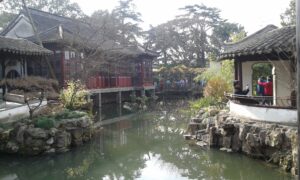
We invited everyone – members and non-members alike – to use this image, ‘Chinese Garden’ (photo by A. Wong) to inspire an original response in 300 words or less. Submissions closed on Sunday 27 July 2025. We received an array of inspired entries! Thank you to all who contributed.
Congratulations to the following 22 writers for their submissions:
Steve Gray Gail Griffin David Bridge S G Billing John Heritage
Deb Lucas Glenyse Robins-Ward Geoff Gaskill Howard Osborne
Ian Chisholme Mary Szymanski Denise Main Hilary Guest
Allan Barden Russell Abbott Fran O’Mara Saakhi B Rebecca Law
David Jones John Margetts Bev Blaskett AB
A garden can consist of light and shade; diverse individual specimens can highlight unique aspects to create different moods, which can occupy the living common ground. A garden can be comprised of harmony in a traditional patterned arrangement, or of free-flowing wildness which creates its own shape and form. A garden will flourish or languish, depending on the effort and skill of the gardener, and whether harsh or favourable conditions prevail; and the visitor can be immersed and mesmerised by the experience …
… as I trust you will discern as you enter into each of the garden plots below.

Beneath the willows of Suzhou
In the shattered hush of Suzhou’s bones,
Where willows weep like widows alone,
I hide beneath the painted eaves,
A ghost among the garden’s leaves.
Stone lions grin with teeth of frost,
Their silence knows how much we’ve lost.
The koi no longer circle wide—
they float, like secrets none can hide.
Jin Ho, with eyes like shadowed ink,
Moves through the reeds, dares not to blink.
She’s kept me safe through crawling nights,
When drones above flash ghostly lights.
My ribs show through my threadbare coat,
My breath, a whisper in the throat.
Each crumb a feast, each hour a war,
And every knock a distant roar.
The world is burned, the air is tight—
each breath a trespass in the night.
They say I’ve seen what can’t be told,
That truth, once known, turns men to gold—
or dust, or blood, or something worse.
Now silence is my heavy curse.
If I am caught, they’ll fall like glass—
twenty-three names the shadows pass.
One slip, and weeks from now, they’ll choke
on smoke and lies and gas and smoke.
But still, I dream of harbour’s gate,
Of rusted ships and fickle fate.
Shanghai flickers through poisoned haze—
A chance, perhaps, to slip its gaze.
Jin Ho will watch until I’ve gone,
Then vanish like the coming dawn.
If luck walks with me, cloaked and still,
I’ll leave this garden, cheat their kill.
But if I fail—oh gods, beware—
There’s no one left to lift the air.
– Steve Gray
Chinese garden
Exquisite man-made creation of selectively-chosen colours, textures and shapes.
Its tinkling water a focal point, reflecting nature’s plants, stones and walkways.
Traditional pavilions invite those seeking serenity, spiritual connection, refreshments.
An ancient art form encapsulating changing seasons preserving generational culture.
– Gail Griffin
Natural harmony
Our group moved around the garden walkways listening carefully to our local guide explain over the wireless link the intensions of the landscape creators, particularly that of expressing harmony between man and nature. My earphones were momentarily overpowered by a garbled shout as two young teens rushed past haggling over a digital game. I caught something about ‘boring’ and ‘It’s mine.’
Re-engaging with the narration, I took in the unfolding vistas progressing to the approaching water’s edge where elaborate oriental buildings of different sizes lined the pathways. A couple, seemingly the parents of the two still squabbling children, leaned back against a balustrade endeavouring to capture themselves together with the pool’s unbroken reflection. A heron, statuesque in the shallows below, took to the air streaking the surface. There was a shout of annoyance from the couple – ‘Stupid bird, the picture’s ruined.’ The cry was taken up by their offspring, who ran towards trees where extravagantly coloured ducks broke from their roost to mingle with the water lilies at a safe distance.
I was relieved to be directed towards a pavilion where exquisitely carved lacquerware, replete with reliefs composed of birds and flowers, absorbed my attention. Our guide pointed out a nearby specimen of the tree cultivated for its sap used in the lacquerware process. The guide, and large multilingual signs, advised visitors not to stray near its branches because of potential irritant properties.
As we moved on past dark red peonies towards a hillside decorated with pink budded rhododendron bushes, I heard the shrieks of the children approaching. As they started to jump and grab at the lacquer tree foliage, I thought of calling out but saw their parents catching up. Soon shrieks of laughter became shrieks of pain and I mentally acknowledged nature’s ability to restore balance.
– David Bridge
Beautiful Yu Gardens
Few years ago, the loving wife and I
Got on a plane and to China we did fly
Landed in Shanghai and we were glad
One of the best holidays we ever had
Probably biggest city we had ever seen
Friendliest people and spotlessly clean
Walked around and was completely stunned
At beautiful sights along river called The Bund
Went to the markets, lots of joking and laughing
To get some bargains and to enjoy the bartering
Found the Chinese, whether it be day or night
So very charming, friendly and extremely polite
Some sights we saw were sights to behold
Like the monks in their temples made of gold
We loved the shopping and got lots of bargains
Nothing compared though to lovely Yu Gardens
Away from the busy streets, little bit of Heaven
These wonderful gardens were built in 1577
Built by the Pan family during the Ming Dynasty
Destroyed a few times by war and other tragedies
Reopened again in1961 returned to its former glory
Looked around and listened, such an incredible story
Spent the whole day there and wow, what a treat
Would like to have stayed there, for a whole week
Zig zag bridges, pagodas, rockeries and sparkling pools
With colourful carp swimming around in large schools
A rockery, thousands of tons of rocks, 14 meters high
Or just rest and relax in the teahouse, oldest in Shanghai
Such an awesome sight, mixtures of colour and texture
I was completely amazed at some of the architecture
Jiu Qu Bridge or bridge of nine turns, had me awestruck
Chinese believe walking the bridge brings you good luck
The wonderful, Exquisite Jade Rock calls garden its home
Five- ton, lovely, porous spiked rock made from limestone
Beautiful, shaped piece of Earth comes from nearby Lake Tai
Said to be one of the oldest stones in the city, of Shanghai
Yu Garden is more than just a garden; it’s a place to escape
Was created as a space for melding poetry and landscape
We needed to visit Yu Gardens, actually, we felt compelled
Not just a tourist attraction, but eighth wonder of the world
– S G Billing (all rights reserved)
Chinese garden
opportunities
waiting
to be noticed
i look up
through the canopy
and see
a treehouse
to be built
finding the right environment
my creative skills
can build a place
to live
where eagles soar
taking
my unfinished stories
– John Heritage
Sky
Footsteps by tourists
jostling
selfies on sticks
a quick pic.
Vibrations, on a bridge
shivering
dwellings, blink surprised
emptiness.
Reflections, a pond
diminishing
muted of clarity
by absence.
Glimmering silver carp
vanishing
dancing with the moon
a memory.
Murmurations of spirits
languishing
through endless lacklustre
grey days.
Searching for release in eyes
wondering
how it is they lost sight
of the sky.
– Deb Lucas
Foggy morning
As the fog rises to mark the coming of the sun, the sleepy-eyed travellers had come to watch and enjoy the cold, misty morning, all decked in their layered clothing for another learning and sharing of the culture that they had not known.
In their normal lives, they lived on the other side of the globe where the heat was extreme and the lakes were often dry, but to these travellers, it was a chance to see and witness something beautiful as they stopped for yet another photo shoot.
Everything was still and refined with strictly planned features that caused the shadows to form in the still waters below them, and as they watched for a while, then moved to the other side, the serenity of the gardens moved with them and so did the water as it drifted under the bridge capturing their images as they looked down.
‘Time to move on,’ the voice from afar called as he sounded his bell to gather his travelling troop. ‘I know leaving this place of beauty will be hard, but it has been here for so long that it will be here once more if you are pleased with it and want to come back.’
As they walked to the bus on the hill, the fog had lifted and the sun shone through, warming them so much that it was time to strip off one or maybe two of the layers of clothing and carry on to their next destination.
As the travellers were driven away, they checked their camera to see what they had taken and were amazed by the beauty that came through with some things they hadn’t seen as they strolled their way through the garden.
– Glenyse Robins-Ward
Seeing
Through the phone camera lens, the Chinese gardens looked old. Or maybe not. Backgrounds in selfies weren’t always clear. But, to Tommy, these ornamental grounds were redolent of history.
He moved the phone further, watching the panorama of the gardens cross the screen.
‘What were they like?’ he could imagine his friends back home asking, enviously scrolling through his dozens of selfies.
‘Impressive. Really … historical.’
Like him, his friends were all history buffs about such places. He had Tommy at the Eiffel Tower, Tommy at the Coliseum, Tommy at the Tower of London … Plenty of history behind him in all those places. Now these Chinese Gardens would be a good addition to complete his holiday. ‘Historical,’ they’d repeat, nodding. The word said it all. Historical.
From his perch on the bench under the shade of a pagoda, Tommy giggled, a frisson of wicked naughtiness rippling through him as he took a selfie with the crowds snapping their own selfies as background.
For a historical building, the pagoda looked in surprisingly good condition. He needed a selfie to include that. Suddenly, through the viewfinder, his eye settled on the brown and dirty canal. He panned the camera. Whatever the gardens were, he thought, both he and the other visitors snapping their own cameras, were photographing similar things.
He sighed, glad he wasn’t like them. They were just dilettantes.His selfies were done for history, posterity.
He snapped his last selfie with the bridge crossing the canal in the distance. He stood to leave. He felt the weight of the phone in his hand. Thank God for it. How otherwise would he remember all his holidays if he didn’t have one? Then he shuddered. What on earth did people do before they were invented?
– Geoff Gaskill
Captured moment
There is peace in this Chinese garden
As it slowly seeps deep into the soul
Water accepts its form and function
A still sheet of quiet pale green glass
Offering a mirror, reflecting clouds
And even shadows of tree branches
The visitor chatter dies to a murmur
Most find they have breathed deeply
As an image imprints upon the mind
And within those cameras held high
Capturing that single special moment
– Howard Osborne
The end came quickly
It was a searingly hot start to the day. A terrible north wind. A day of vigilance on everyone’s lips. The siren sounded early afternoon, demanded action. Smoke sighted on the eastern ridge, 20 km away.
Volunteers from every direction arrived at the Rural Fire Station. Toby leapt from his ute, slammed the door and ran.
‘She’s a bigun,’ Chief Fitzgerald warned the group, his brow furrowed, voice grim with urgency. Toby’d been through it all before in his thirty years a volunteer. He winced.
Raised in the bush, a dedicated protector of wild animals, he had spent his life caring for these beautiful creatures and their habitat. Rescued possums, injured birds, abandoned baby kangaroos or wombats, he attended to their wounds.
His volunteers were assigned the western perimeter; the track steep, vision near zero, the heat intolerable. Sweat flowed freely as the men leapt from the tanker and plunged into battle. The enemy was ferocious, uncaring, unwilling to turn back.
Hours later, the flames were quelled, the enemy beaten. As they mopped up Toby surveyed the smouldering, blackened remains. He heard a cry. He followed it. In a still smouldering hollow, he saw a cringing shape. A wombat. Its hair terribly singed. Toby stood helpless.
He heard another gut-wrenching cry. He could do nothing. His tears welled. The end came quickly.
The dying animal’s cry would haunt him for weeks afterwards.
That night, to ease his grief, to help forget, he sat quietly and held a photo he’d taken of his wife and daughter in the stunningly lush, beautiful Chinese Garden they had visited recently on a trip to China. So serene. So calm. The green reflections in still water, the delicate foliage, all soothed his mind. But not for long, he knew.
– Ian Chisholme
The train to Bendigo
Before I met Annie, I met the Nurse Manager.
‘You get used to death when you work in aged care,’ she said.
‘I imagine you do,’ was all I could think to say.
I recall her eyes. A glint of amusement mixed with weariness. Could I work with her? Didn’t have to worry. Six weeks later she resigned.
Four years passed. I was still there while five Nurse Managers came and went.
Annie became a ‘resident’ the minute she faltered through the doors of the nursing home, into its welcoming reception area. Her daughter, Elise fussed and talked too loudly taking on the mother-daughter role reversal with gusto. I’d learnt not to be critical. It was an emotional minefield for families.
The picture was already in Annie’s room, left behind by the previous resident’s family.
‘Oh, it reminds me of the Chinese gardens. In Bendigo. Harry and I spent hours there,’ said Annie. ‘My lord, I couldn’t do it now, not with these knees.’
She surrounded the picture with photos: husband Harry, daughter Elise, grandchildren and great grandchildren.
We saw Elise infrequently after the first six months of Annie’s arrival, though she phoned often to discuss Annie’s care but seldom to speak with her; was busy, she said.
Annie told me all about Elise and Harry until month by month, Harry eventually disappeared into her frown and one day she asked,
‘Have you seen Mother?’
‘No, Annie. She must be shopping,’ I lied.
‘But she was at the station yesterday. She went on the train to Bendigo.’
I held her hand and said I’d find out where Mother was.
‘My darling Elise, you’re a good girl,’ she smiled and kissed my hand.
‘Thank you, Mum,’ I lied.
You get used to lying when you work in aged care.
– Mary Szymanski
The Power of Five
Mei Lin sat beside her Gung Gung on their favourite bench in the Chinese Garden.
‘Now you are five I will tell you the garden’s story and why you were named Mei Lin.
Are you listening?’
‘Yes, Gung Gung.’
‘Long ago, in 1850, a young Chinese woman sailed the ocean and arrived in a small Australian port called Robe. She came to look for her brother, who was in Victoria searching for gold. Mei Lin was the only woman to join the Chinese 500 kilometres walk to the goldfields and Dia Gum San, Mountain of Gold.
‘She became ill in Penola and was cared for by settlers. Recovered, she was joined on the walk by their son, George. Five weeks later, exhausted, they reached Dia Gum San and camped by a creek with Chinese gold seekers; sadly her brother was not there.
‘In love, Mei Lin and George stayed together. Every day they panned for gold. Even if she couldn’t find her brother, she would send money home. Eventually, they had enough money to send, and for George to build a shack from bark and stone. Mei Lin became with child and needed a Chinese garden with five essential elements to welcome it.
‘Nearby, there was a bend in the creek. Just the place to build a small garden, using the five elements.
‘Wood: Spring, growth, plants.
‘Fire: Summer, energy, passion, light, sunshine.
‘Earth: All seasons, steadfastness, rocks, stone.
‘Metal: Autumn, clear vision, reflection of light on surfaces.
‘Water: Winter, flow of life through ponds and creeks.
‘Mei Lin, my ˈɡranˌdôdər, this garden is now ours. It began its five elements journey with the first Mei Lin, George and their baby, named Goldfields. You must cherish it and visit often.’
‘Yes, Gung Gung.’
– Denise Main
Another country
The joyful shrieks of his great grandchildren pierced his deep, deep slumber. Someone was shaking his arm; a woman’s voice. Peggy, his long dead wife? No, Shelley, his daughter. Stupid Australian names, he thought. Should have been Katharina, after his mother.
“Dad, Dad, you’ve got a visitor! Here’s Geoff come to see you.”
“Hey, Charlie, having a nanna nap?”
Who the hell was Charlie? He was Klaus, in his little bed, his door open a crack, listening to his mother and father, speaking in agonised tones they never used to him. Drunken crowds roared through the street outside, merrily smashing glass as his terrified parents discussed leaving. His father’s university post was gone; would he be deported as a despised liberal? Should they abandon everything but their lives?
“Cup of tea, Dad?” he was wrenched back to the present.
“So waddaya reckon on the election, eh? Those yanks crazy or what?”
But he refused to discuss politics. He didn’t care that they all considered him a grumpy old bugger. He’d seen it all before. A would-be saviour promising the earth, dragging everyone to destruction. Shiny toys for foolish children. It was like that church in Bendigo, elegant on the outside, but the foundations hopelessly cracked. It was what you couldn’t see that was disastrous, the muddy, fetid depths hiding God knows what.
– Hilary Guest
A mother’s longing
The Vietnam Linh remembers lives in her dreams. A gentle village, a river winding through it, her mother’s laughter while over the cooking saucepan, her father’s quiet strength. Her village, once peaceful, was lost to war.
In 1975, with danger closing in, Linh boarded a small, overcrowded boat bound for the unknown. The hardest part wasn’t the sea or the fear – it was the heart-rending decision leaving her son behind. She had no choice. There was no room.
She settled in Sydney, found factory work, learnt English.
Every night Linh lit incense and whispered her son’s name. She wrote letters, begged officials, lobbied politicians, filled out forms, sat in waiting rooms with trembling hands. Years passed. Rejections came. Policies and quotas changed. Hope faded
Linh often visualised the floating green water hyacinths drifting atop the river surface covering it like carpet. She remembers the village factory that made purses, baskets and more from the water hyacinths.
She imagines her father cruising the river in his fishing boat and the floating market where her mother sold sweet potatoes, onions, water melons and small cakes.
Her memory is so vivid it is as if she is still there. She knows that river. She can still smell it.
Linh kept every rejection letter. She never stopped trying – and crying.
One morning a plain white envelope arrived. No government crest, no expectation. Her hands shook as she opened it.
Application Approved.
She read it once. Twice. Three times. The words blurred, she sobbed. After all the silence, the indifference, the waiting – he was coming. Her boy. Her son.
That night, Linh stood outside and looked up at the stars. She imagined the river back home. It had taken nearly a lifetime, but the current had brought them back together.
– Allan Barden
Songs from the garden
Marco belonged to a popular Rock & Roll band and was the main songwriter. However he had writer’s block: nothing was inspiring Marco.
A studio was booked to record their new songs and time was running out. Marco rented a shack that he had used before. It was beside a mountain stream far from the noise of the city. The retreat was set in a peaceful Chinese garden, which included wind chimes and decorative fountains feeding ponds filled with carp.
Marco arrived with minimal gear, no booze, no smokes, just his faithful electric guitar, or so he thought!
After gentle days of relaxing Marco felt it was time to begin writing, even though he still had little inspiration. He opened the guitar case, however he found he had bought with him, not his favourite instrument, but his father’s vintage Spanish guitar which he had been given before the old man passed.
There was no choice but to try out the old guitar. Marco restrung it with new strings he found within the case. Once tuned the old instrument sounded amazing. He sat outside beside the running waters and lost himself playing, he felt it played itself, tunes flowed in time with the fountain and the sound of the tinkling wind chimes.
He found his father’s exercise book in the old guitar case. He sat outside in the garden and read his father’s words. As Marco’s tears came, so these words became gentle songs with heartfelt lyrics. Gone were the R&R heavy beats, Marco had found his new place in music.
He called his band members, left the band, went into the recording studio alone with the old guitar and recorded a highly acclaimed album “ Songs from the Garden”.
– Russell Abbott
Our singing garden’s labyrinth of love (After J.L.B.)
Within our singing garden’s forking streams width in extensive labyrinths
of bulbous lily and water hyacinth the scintillant light not right it seems
within our singing garden.
In my taunting circular dreams of our sometime straight embrace
The labyrinth trails your fading face transversing the twisted forking streams
of our singing garden.
I watch your back recede in rippling echoes of your princely song
dynastically wronging all our aggrieved loves deceivingly achieved
in our singing garden.
Dying leaves swish your name Susie-Joe by the forking streams’ labyrinthine flow
Our singular love torrent traducingly low loosens the dreams once framed
by our singing garden.
Our dynasty of songs mouthed in whispered truths above the strangled borders
Of voluted forking streams disorder my memoried heart’s envisioned clove sister
through our singing garden of labyrinthine love.
– Fran O’Mara
Chinese garden
I have lived here for my entire life.
I have watched tourists come and go.
Come and go after being amazed by the mesmerising scene their eyes behold.
I know, for I take photos for them to throw away like worthless possessions.
However, the beauty, the soul, the secrets those pictures have captured are priceless.
The incomparable worth of this place is only appreciated by a certain few.
Few who understand the value of history and true knowledge.
I have watched tourists come and go.
Yet, not one of them holds the understanding of this place.
Nor do I, truly.
But trying to understand is the least we can do for this holy place.
This ancient garden.
Saakhi B.
Once around the pool in the Chinese garden
Those roofs are for a reason,
demons who skirt their tails
suddenly challenged in the upward drift
& doorway arches too have their cause
for ceremony, leaving interiors
to exterior gardens is a quiet moment
of becoming – do we ever not
stop near water, moving our hearts to
deeper reflection. After all, that photographed
togetherness can’t be lived. Even the trees
waving know that breeze is occasional
and one stone casts a thousand ripples.
A white sky. This winter the brilliant sun
draws out the red from chilled cheeks
empirically. Not everyone is passing by,
says the goldfish to the black fish who
is feeling a little depressed at the feed always
dwindling in the ebony of encroaching dusk;
but he’s dubious, sees gates, exits.
There was, is, an artist
who trims the bonsai
to the shape of a drooping cantilever,
whose shade is more beautiful
than moon to a moored boat.
On the rocky outcrops at night,
they say a snowbird bows at the water’s edge,
that its reflection is a long-lost lover
who rises like a mist into the heavens;
and the snowbird, stretching its long neck
toward the sky, sheds tears into the wisp
of her shrewd, outstretched wing.
– Rebecca Law
The moment
Beneath bird-wing eaves
Ancient architects dreamed
graceful bird-wing curves
to lift unholy buildings
connect the heavens
and this, our alluvial reach
And here, beneath their flying eaves
modernity takes its transient place
Between
trees absorbed into deep-distance
and this somnolent river’s source
Unknown, and unseen
a pliant essence
time
Flows its steady course
reflections of now
to be lost
to become gone
To yield to a new modernity
a new now
beneath those flying eaves
ascribed constant
Between
the future
and that now past
– David Jones
Chinese garden
The fake consoling arm of the Party falls across her shoulders, a perfect harmony of red and blue. Camera man films her failure – for the archives.
At the head of this tiny enclave a line of hopefuls mingle, behind a fence. Who will be next? Among them will anyone be admitted? Only the Party knows.
Red Coat leads her off camera to who-knows-where. Some say to the Outer Provinces to begin a new life in one of the uranium mines. Others say she will join the ranks of the shīzōng zhě, never again to be seen by family and loved ones. Only the Party knows.
– John Margetts
Enduring tranquillity
Amid the turbulence of dynastic rise and fall,
Sanctuary lies behind stone wall;
Trees twist and twine, constrained and shaped;
Gorges in miniature, vistas landscaped;
Interlaced paths wind beside rock-edged streams
Inviting calm, enabling dreams.
A private garden insulated from strife,
Away from warfare, famine; time capsule of life
Designed to keep the world apart,
Inner sanctum for enlightened heart;
Yielding the perfect elemental blend
To empower the individual to transcend.
The garden, customised for each master to savour,
Has endured, resurrected by each new enslaver.
Each successive ruler, holding it in his own hands,
For his personal pleasure as his desire expands,
Satisfaction derived from others’ exclusion,
And his power to secure manufactured seclusion.
After tumult, by forced labour the nation grew,
Remodelled to order, made anew.
Reformed gardens now open for public admiration
To inspire pride in a State commanding re-education,
Romancing past glory, proclaiming ‘new shared prosperity’;
An insatiable elite gorges upon mass austerity.
– Bev Blaskett
“Colleen and her friends are probably a bit racist”
Could you believe the water was green Colleen?
In a land I’d never before seen Colleen.
Flew there on a big winged machine Colleen,
And felt like an absolute Queen Colleen.
For relaxation I was so keen Colleen,
Until I made a bit of a scene Colleen.
You see I bad mouthed their cuisine Colleen,
And told them their skin wasn’t clean Colleen.
What happened next was obscene Colleen,
In fact I felt they were quite mean Colleen.
They said I was acting like a tween Colleen,
And punched me fair in the spleen Colleen.
So I hopped back onto that big winged machine Colleen,
To read an in flight magazine Colleen.
Once more I felt like a Queen Colleen,
And anticipated telling everyone where I’d been, Colleen.
– AB
Image of Chinese dragon Celtic knot courtesy of Gil Scott
https://www.kindpng.com/imgv/ixRwTRb_silhouette-chinese-dragon-drawing-stencil-dragon-celtic-knot/
Leave a Reply